 Inked Mythos
Introduction to Blackwork Realism Irezumi Tattoos
Blackwork realism irezumi represents a powerful fusion of traditional Japanese tattooing and contemporary shading techniques. This style blends the bold outlines and symbolic motifs of irezumi with hyper-realistic depth created through meticulous blackwork shading. Clients often seek these tattoos to honor cultural heritage while achieving lifelike detail on their skin. The appeal lies in the contrast between ancient symbolism and modern precision, allowing wearers to express personal stories through visually striking artwork that evolves beautifully over time.
The following case studies highlight successful transformations across different body areas. Each example details client objectives, obstacles faced during design, specific artistic methods employed, and the striking final results. By examining these real-world applications, readers gain insight into how this hybrid style can be adapted to various body types and personal narratives.
Understanding the Fusion of Blackwork and Irezumi
Traditional irezumi features strong linework, vibrant motifs like dragons and koi, and cultural significance rooted in Japanese history. Blackwork adds intricate shading, gradients, and realistic textures using only black ink. When combined, the result is a tattoo that maintains cultural authenticity while incorporating photorealistic elements. This fusion requires artists skilled in both disciplines to ensure the design flows naturally without one style overpowering the other. Clients benefit from tattoos that stand out in portfolios and age gracefully with proper care.
Case Study 1: Full Back Transformation
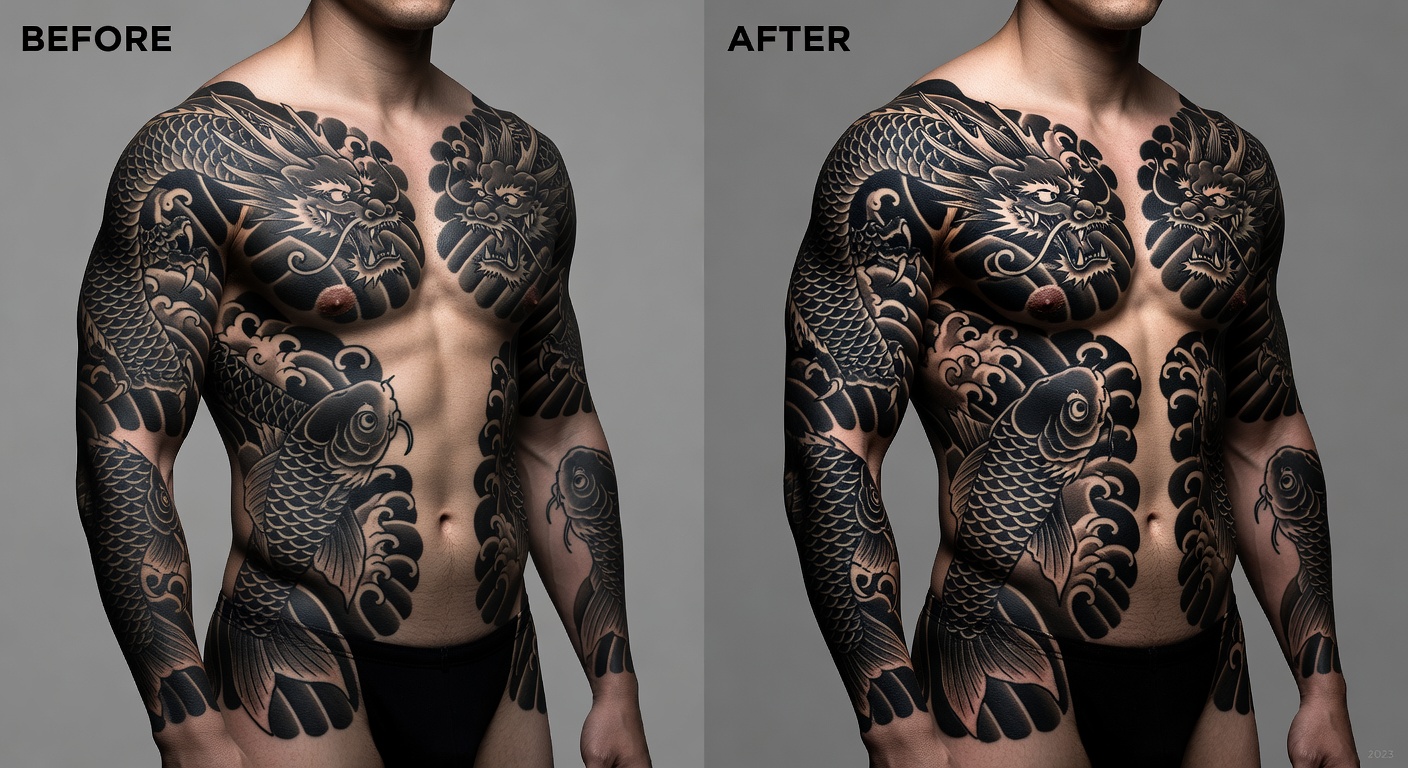
A client in his early thirties wanted to commemorate his Japanese ancestry with a large-scale piece. His goal was a koi fish design incorporating realistic scales and water ripples alongside classic irezumi elements like cherry blossoms. The challenge involved balancing heavy blackwork shading without losing the traditional flow of the composition. The artist used layered dotwork and gradient washes to create depth, resulting in a dramatic before-and-after where the tattoo now appears three-dimensional under natural light. Multiple sessions allowed for precise adjustments, and the client reported increased confidence after completion.
Case Study 2: Full Sleeve Integration
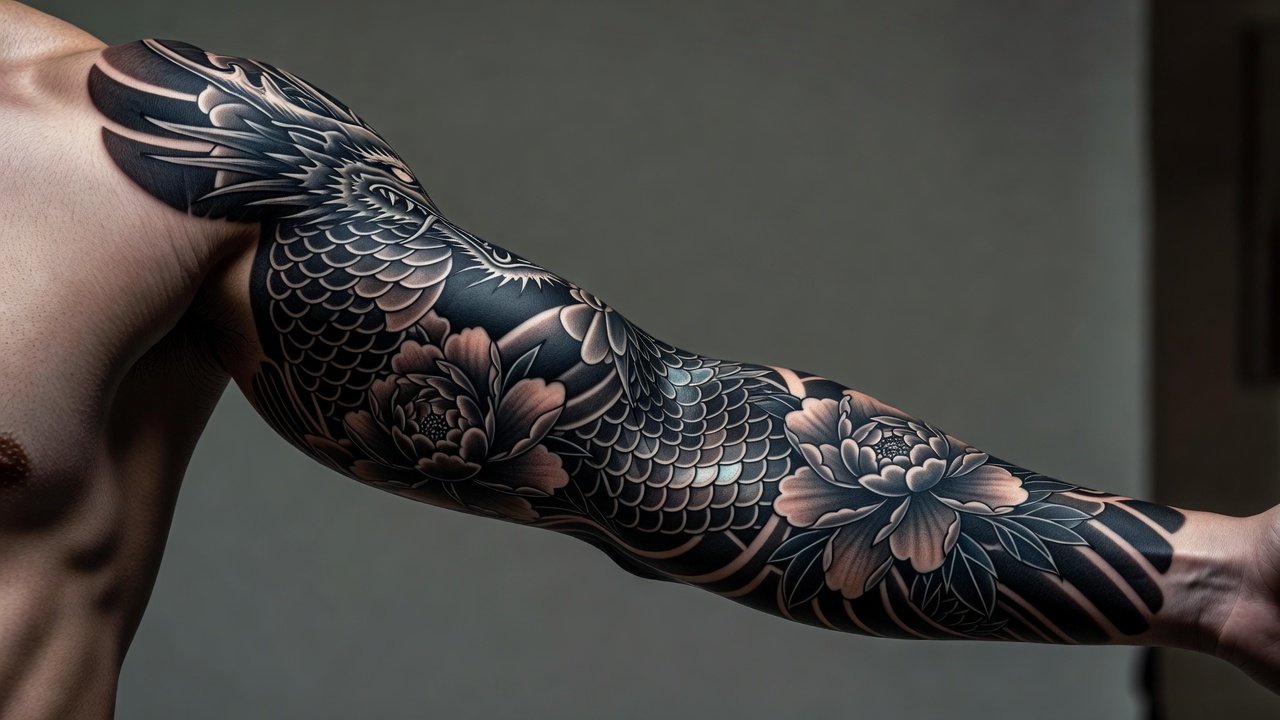
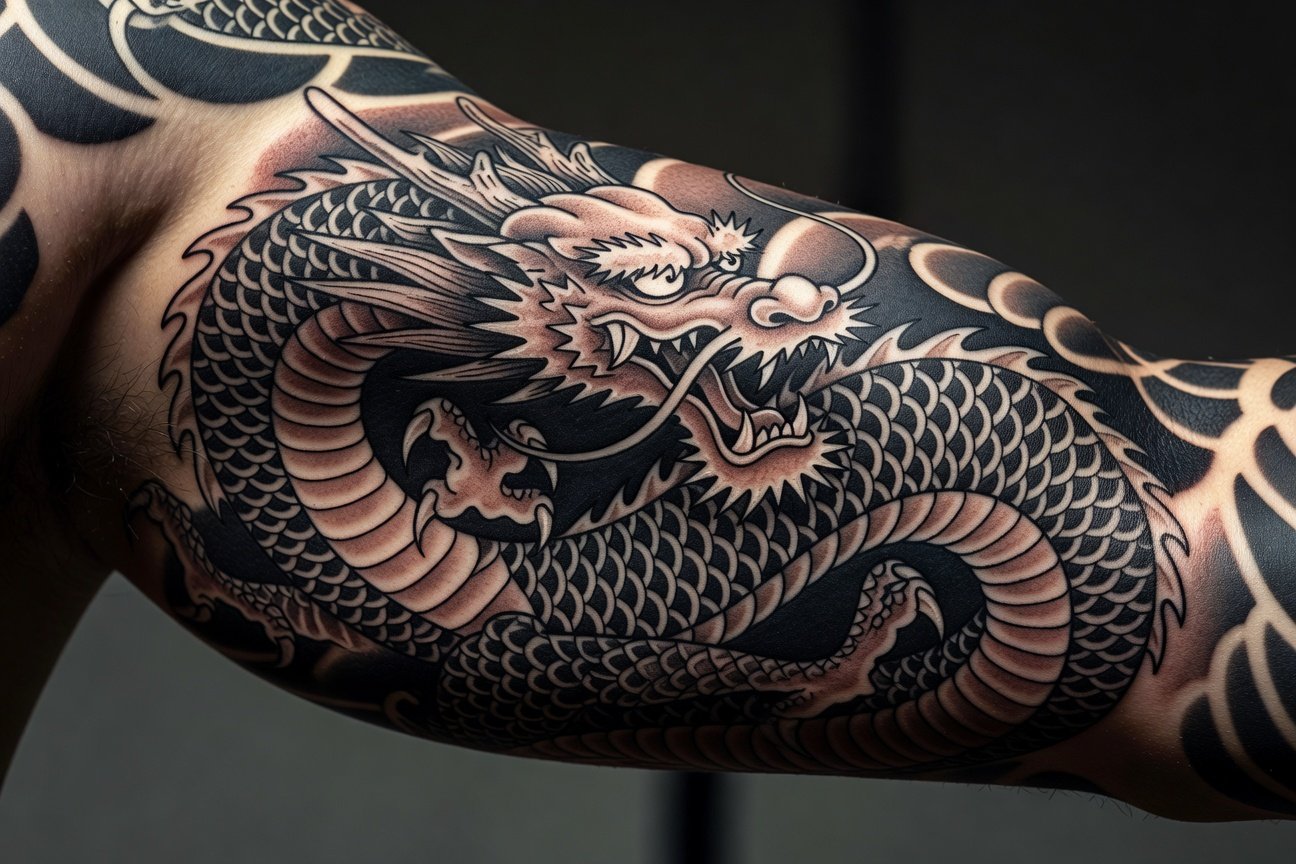
Another client, a martial arts instructor, requested a dragon sleeve that merged irezumi linework with photorealistic textures on the scales and claws. Design challenges included maintaining movement around the elbow and forearm. Techniques such as fine-line cross-hatching and strategic negative space helped overcome skin texture variations. The outcome transformed a plain arm into a storytelling canvas that captures both power and elegance. Follow-up appointments ensured even healing across curved surfaces.
Case Study 3: Chest and Ribcage Piece
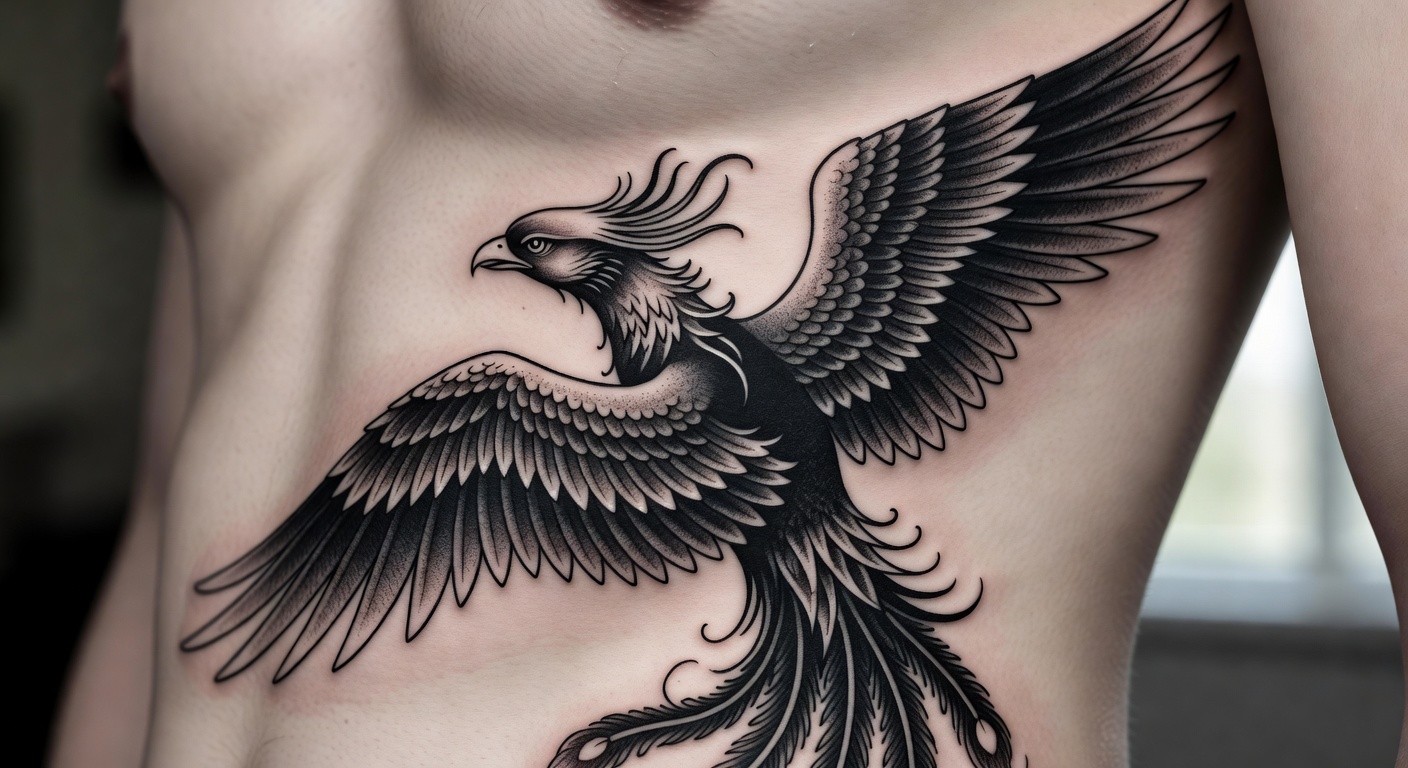
For a woman honoring family resilience, the design featured a phoenix rising amid peony flowers. Blackwork shading added realistic feather details while preserving irezumi symmetry. The artist navigated sensitive ribcage skin by employing slower, lighter passes and custom needle groupings. The final result delivered emotional impact with intricate contrast between bold motifs and subtle tonal variations. The client noted how the piece became a daily reminder of strength during personal challenges.
Case Study 4: Lower Leg and Ankle Design
A traveler commissioned a tiger motif wrapping the calf and ankle. Goals centered on durability for an active lifestyle. Challenges included curvature of the ankle bone. Precise stippling and directional shading created lifelike fur texture. Post-completion photos show how the piece retained vibrancy and definition after months of healing. The client appreciated how the tattoo complemented athletic wear without distortion.
Case Study 5: Upper Arm and Shoulder Collaboration
This client combined a Hannya mask with realistic smoke effects. The artist overcame the transition from mask to shoulder by using graduated blackwork gradients. Multiple sessions ensured precise alignment, yielding a bold yet nuanced final piece that photographs beautifully from multiple angles. The design incorporated personal elements like subtle family crests hidden within the shading.
Artist Techniques and Tools Used
Successful blackwork realism irezumi tattoos rely on specific tools and methods. Artists often employ rotary machines for smooth gradients and traditional coils for bold lines. Needle configurations range from single needles for fine details to magnum needles for broad shading. Ink selection focuses on high-quality black pigments that heal evenly. Techniques include whip shading for soft transitions, stippling for texture, and negative space to create highlights. These approaches allow the traditional irezumi structure to support realistic elements without visual conflict. Understanding these methods helps clients communicate effectively with artists during planning.
Practical Tips for Consulting Tattoo Artists
- Research artists specializing in both blackwork and irezumi through verified portfolios and client reviews.
- Prepare reference images that clearly separate traditional motifs from desired realistic elements.
- Discuss skin type, placement, and lifestyle factors during the initial consultation to anticipate healing needs.
- Request mockups showing shading progression to visualize the final outcome before committing.
- Schedule multiple sessions if the piece is large to allow skin recovery between appointments.
- Review aftercare instructions thoroughly and follow them consistently for optimal results.
Mistakes to Avoid When Pursuing This Style
Common pitfalls include choosing artists without hybrid experience, leading to unbalanced designs. Overloading a small area with excessive detail can cause blurring during healing. Ignoring body movement and placement often results in distorted motifs over time. Clients should also avoid rushing the design phase and instead invest time in collaboration. Consulting medical resources such as American Academy of Dermatology and Mayo Clinic ensures informed decisions about skin health. Additional guidance from Centers for Disease Control and Prevention supports safe practices.
Frequently Asked Questions
Can blackwork realism work with any irezumi motif?
Yes, when executed by skilled artists. Compatibility depends on proper contrast planning and understanding how shading interacts with symbolic outlines. Most motifs adapt well with thoughtful composition.
What are typical healing expectations?
Healing generally follows standard tattoo timelines, with full settling visible around six weeks. Proper aftercare minimizes fading in heavily shaded areas and preserves fine details.
How do I find compatible artists?
Look for professionals with documented experience in hybrid styles and verified client transformations. Attend tattoo conventions or review studio websites for specialized portfolios.
Is this style suitable for first-time tattoo clients?
It can be, provided the client understands the commitment of larger pieces and the importance of aftercare. Starting with a smaller test area is often recommended.
How does placement affect the final look?
Body areas with more muscle or movement require extra planning for shading to avoid distortion. Flat surfaces like the back allow for more intricate realism.
Conclusion
These case studies demonstrate the versatility and emotional resonance of blackwork realism irezumi tattoos. By understanding client stories, technical challenges, and proven techniques, enthusiasts can approach their own projects with greater confidence and clarity for lasting satisfaction.
No comments yet. Be the first!