 Inked Mythos
Introduction to Floral Tattoo Symbolism
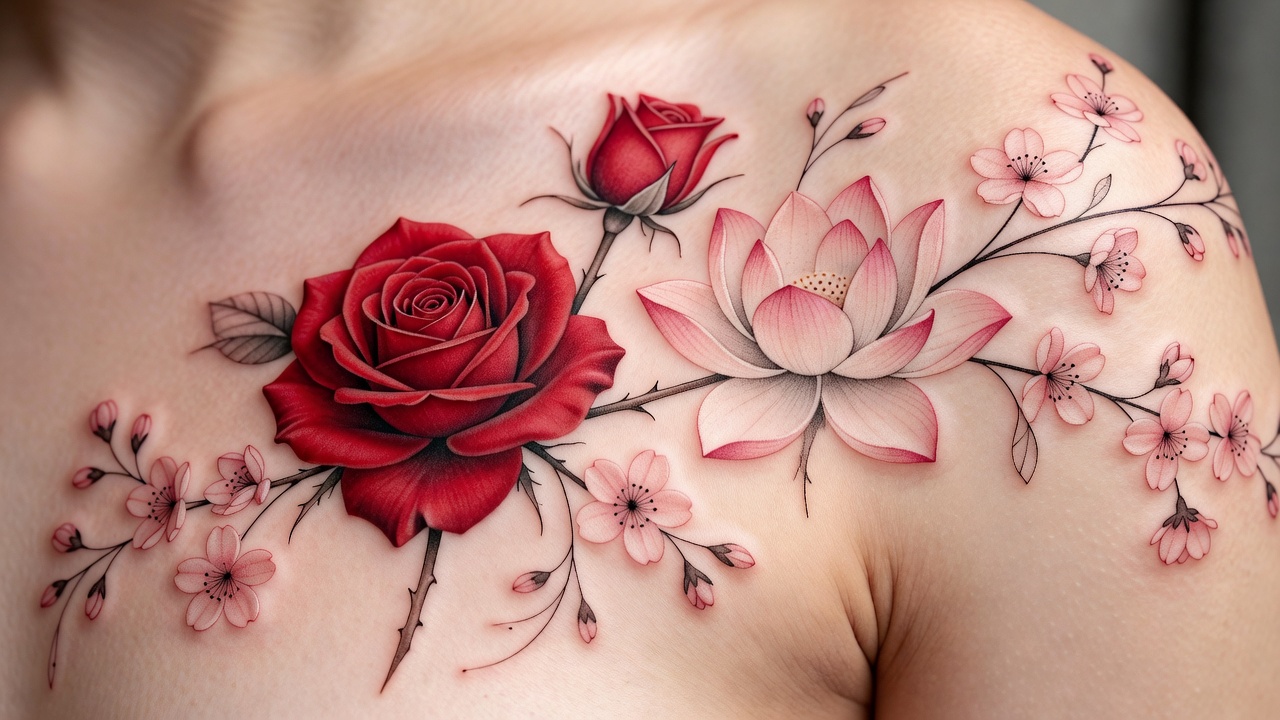
Floral tattoo symbolism has become one of the most searched topics in body art, as people seek designs that carry personal meaning beyond mere decoration. Flowers offer a universal language of emotion, heritage, and life experiences, making them ideal for tattoos that evolve with the wearer. This beginner guide dives deep into the meanings behind popular floral designs, covering roses for love, lotuses for rebirth, and cherry blossoms for fleeting beauty. It also explores cultural origins, how placement shapes interpretation, realistic versus stylized approaches, and practical advice for choosing a design that tells your story.
Search intent for floral tattoo meanings often stems from a desire to connect with tradition while creating something unique. Unlike abstract or sacred geometry topics, floral designs ground symbolism in nature, allowing for endless customization. Whether you are planning your first tattoo or adding to a collection, understanding these layers ensures the final piece feels authentic and timeless.
Roses: Timeless Symbols of Love and Passion
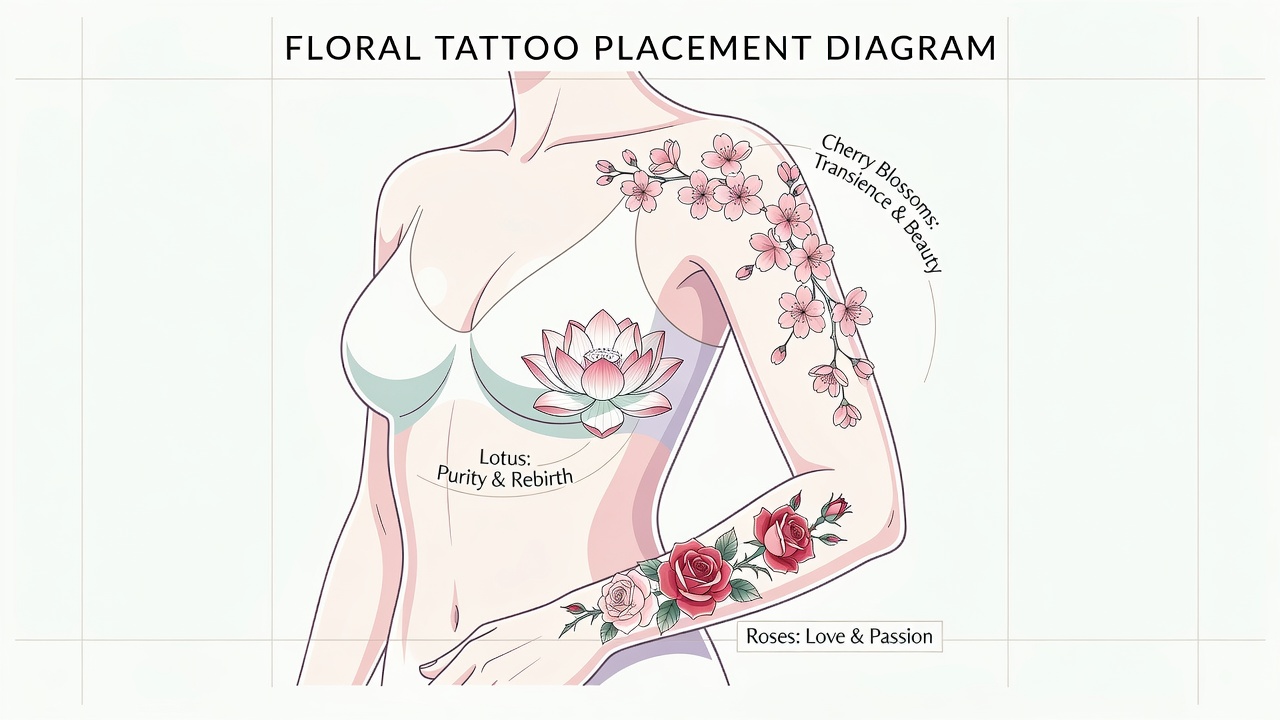
Roses stand as the quintessential floral tattoo, with meanings that shift based on color, number of blooms, and accompanying elements. A single red rose typically signifies romantic love and deep commitment, while a bouquet of red roses can represent family bonds or enduring friendships. White roses evoke purity, innocence, and fresh starts, making them popular for commemorating recoveries or new chapters. Yellow roses traditionally symbolize friendship and joy, whereas pink varieties convey admiration and gratitude. Black or dark roses add layers of mystery, often chosen to mark resilience after loss or personal transformation.
Historically, roses trace their symbolic roots to ancient civilizations. Greek mythology linked them to Aphrodite, the goddess of love, and Roman culture associated them with Venus. During the Victorian era, floriography turned roses into a coded language for secret messages. In contemporary body art, rose tattoos frequently appear in memorial pieces or as markers of milestones like weddings or anniversaries. Practical examples include a thorny red rose wrapping around the forearm to represent love's challenges, or a delicate white rose on the collarbone for private reflection on personal growth.
Placement considerations further enhance rose symbolism. Visible locations such as the chest or shoulder allow the design to serve as a public declaration of values, while more intimate spots like the inner thigh or behind the ear keep the meaning personal. Size variations matter too: a large back piece with multiple roses and vines can narrate a full life story, whereas a minimalist single stem on the finger offers subtle daily motivation.
Lotuses: Emblems of Rebirth and Resilience
The lotus flower rises from muddy depths to bloom unblemished, embodying rebirth, enlightenment, and the triumph over adversity. In Buddhist traditions, the lotus represents the path from ignorance to spiritual awakening, with each petal layer signifying progressive stages of understanding. Hindu scriptures associate the flower with divine creation and purity, often linking it to deities like Lakshmi. Many individuals select lotus tattoos following significant life events such as overcoming addiction, surviving illness, or embracing spiritual practices.
Design examples range from a solitary blooming lotus in soft watercolor hues on the upper back to intricate versions incorporating mandala patterns for added depth. Stylized lotuses with bold outlines suit those preferring modern aesthetics, while realistic renderings capture the flower's natural texture for a more organic feel. Placement on the ankle or wrist provides constant visual reminders of inner strength, and larger pieces across the spine allow for expansive storytelling through added elements like water ripples or emerging stems.
Cultural sensitivity is key when adapting lotus imagery. Researching its sacred status in Eastern traditions helps ensure respectful representation. Personal touches, such as combining a lotus with birth dates or meaningful quotes, transform the tattoo into a unique emblem of individual resilience.
Cherry Blossoms: Capturing Fleeting Beauty
Cherry blossoms, known as sakura in Japan, symbolize the ephemeral nature of life, encouraging appreciation of the present moment. Their brief blooming period each spring serves as a poignant reminder of mortality and the beauty found in transience. This motif gained prominence in Japanese art and literature, where it often appears in contexts of renewal and the acceptance of change.
Popular tattoo designs feature cascading branches with falling petals or clusters intertwined with other elements like birds or lanterns. A full sleeve of cherry blossoms can chronicle personal evolution over time, while smaller motifs behind the ear or on the ribcage offer intimate symbolism for those processing grief or celebrating brief but intense experiences. Learn more about Japanese art traditions at the Metropolitan Museum of Art.
Other Popular Floral Choices and Their Meanings
Beyond the core trio, several other flowers carry rich symbolism suitable for tattoos. Peonies represent prosperity, good fortune, and harmonious marriages in East Asian cultures, often chosen for celebratory pieces. Lilies signify purity, renewal, and maternal bonds, making them fitting for family tributes or motherhood milestones. Sunflowers embody loyalty, optimism, and the pursuit of positivity, ideal for those who value resilience and joy. Poppies denote remembrance, peace, and rest, with strong associations to memorial tributes. Orchids suggest luxury, strength, and exotic beauty, while daisies convey innocence and new beginnings.
Comparing these options reveals opportunities for layered designs. For instance, pairing a peony with a lotus allows simultaneous celebration of fortune and rebirth. Practical advice includes consulting floriography charts during the planning phase to align choices with personal values.
Cultural Origins and Respectful Adaptation
Floral symbolism draws from diverse global traditions. Victorian floriography assigned specific meanings to hundreds of blooms, influencing modern interpretations. Native American cultures often viewed sunflowers as symbols of harvest and sustenance. Egyptian art prominently featured lotuses in depictions of the sun god Ra. Explore global cultural references at Britannica. Respectful adaptation requires studying these roots to avoid misrepresentation and to enrich the design with authentic context.
Personal storytelling angles amplify impact. Incorporate elements like family birth flowers, travel-inspired species, or colors tied to heritage for a narrative that feels deeply individual.
How Placement Influences Interpretation
Body placement dramatically affects both visibility and symbolic weight. Forearm or hand placements signal bold self-expression and invite conversation, whereas ribcage or hip locations suit private meanings. Symmetry through mirrored flowers on both arms can represent balance or duality. Scale considerations include how the design interacts with body movement—flowing vines along the spine shift gracefully, while compact designs on fingers maintain clarity over years.
Additional examples demonstrate versatility: a sunflower on the calf for daily optimism or a cluster of poppies across the shoulder for remembrance. Always discuss mobility and future lifestyle factors with your artist.
Realistic Versus Stylized Approaches
Realistic floral tattoos prioritize photographic detail, capturing subtle gradients, dew drops, and petal veins for striking lifelike results. This approach suits individuals who appreciate precision but demands highly skilled artists and may require periodic touch-ups. Stylized methods, including line work, watercolor splashes, or geometric integrations, provide artistic interpretation and often age better due to bolder forms.
Examples include a hyper-detailed rose with individual hairline shading versus a minimalist cherry blossom in single-line art. Test both through temporary transfers or digital mockups to visualize long-term appeal. Mistakes to avoid include overcrowding small areas or neglecting negative space, which can lead to muddled aging.
FAQ: Selecting a Meaningful Floral Tattoo
How do I choose the right flower for my story? Begin by listing core life events or values, then cross-reference traditional meanings while adding custom elements like initials or dates.
Should color be included? Vibrant colors amplify specific emotions—red for passion, purple for spirituality—but black-and-gray offers enduring elegance across skin tones.
Can multiple flowers be combined effectively? Yes, bouquets enable complex narratives, such as roses for love alongside lotuses for renewal, provided the composition maintains visual harmony.
What preparation steps ensure a successful outcome? Research artists specializing in floral work, schedule consultations, and allow several weeks for design refinement.
How does aftercare preserve symbolism? Proper healing protects fine details, maintaining the tattoo's intended meaning for decades.
Conclusion
Floral tattoo symbolism provides a profound medium for expressing love, resilience, transience, and cultural connection through nature-inspired art. By exploring meanings in depth, respecting origins, weighing placement options, and comparing stylistic approaches, you can craft a design that remains relevant and inspiring. Engage with experienced professionals to refine your vision, ensuring the completed tattoo becomes a cherished chapter in your personal narrative.
No comments yet. Be the first!