 Inked Mythos
Eastern vs. Western Tattoo Symbols: A Cultural Deep Dive
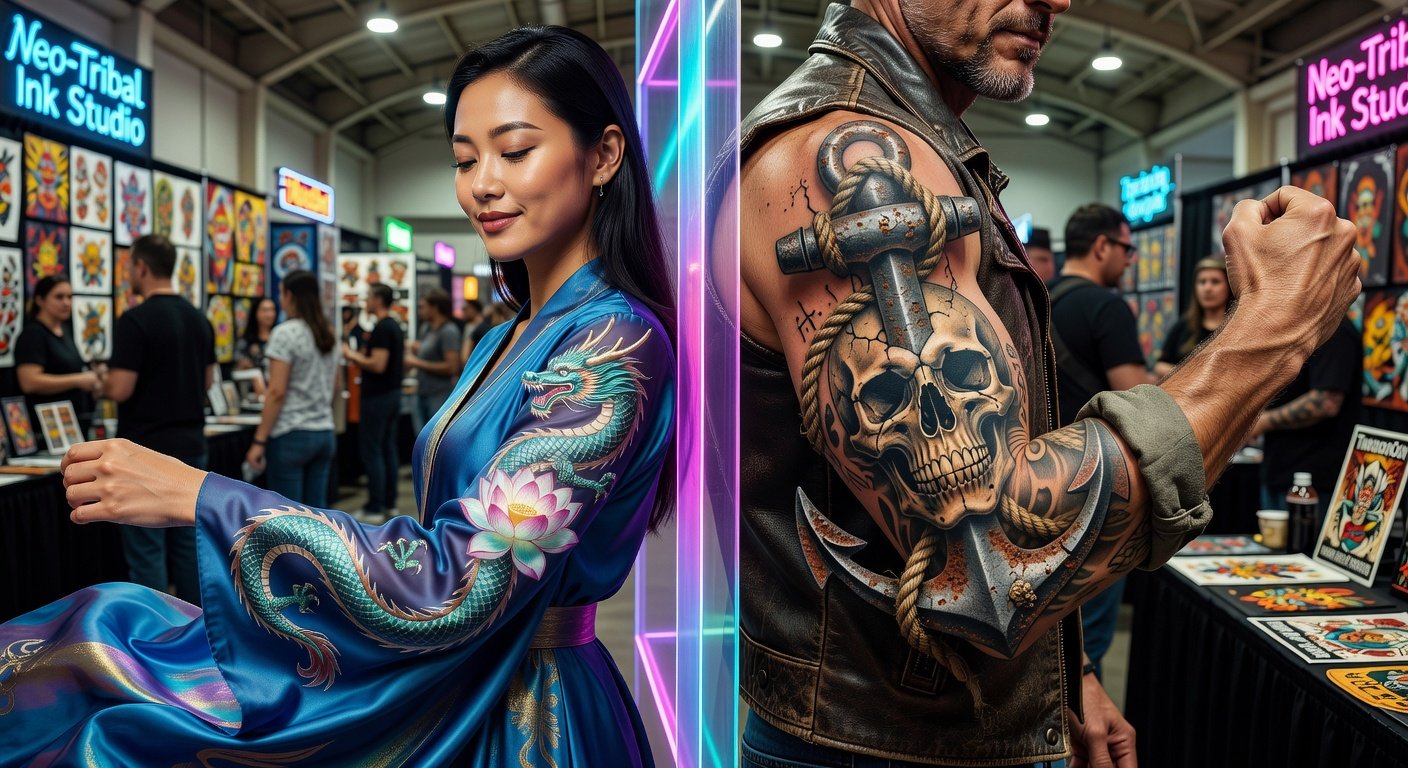
Tattoos are more than ink on skin—they're stories etched in permanence. From ancient rituals to modern self-expression, symbols carry profound meanings shaped by culture. Eastern tattoo symbols like dragons and lotuses evoke spirituality and power, while Western icons such as anchors and skulls represent resilience and mortality. In this article, we'll compare these traditions, explore their unique symbolism, and examine how globalization is blending them into exciting fusions by 2026. Whether you're planning your first ink or curating a collection, understanding these meanings ensures your tattoo resonates deeply.
Eastern Tattoo Symbols: Power, Purity, and Harmony
Eastern tattoo traditions, rooted in Asian cultures like Japanese, Chinese, and Thai, emphasize balance, nature, and mythology. These designs often draw from Buddhism, Taoism, and folklore, transforming the body into a canvas of enlightenment.
The Dragon: Emperor of Strength and Luck
In Chinese and Japanese irezumi (traditional tattooing), the dragon symbolizes imperial power, wisdom, and good fortune. Unlike Western fire-breathing beasts, Eastern dragons control water, rain, and weather—guardians of prosperity. A coiling blue dragon on the back might ward off evil and bring success, as seen in yakuza full-body suits. Their serpentine form represents yang energy, fluidity, and transformation.
The Lotus: Rising Above Adversity
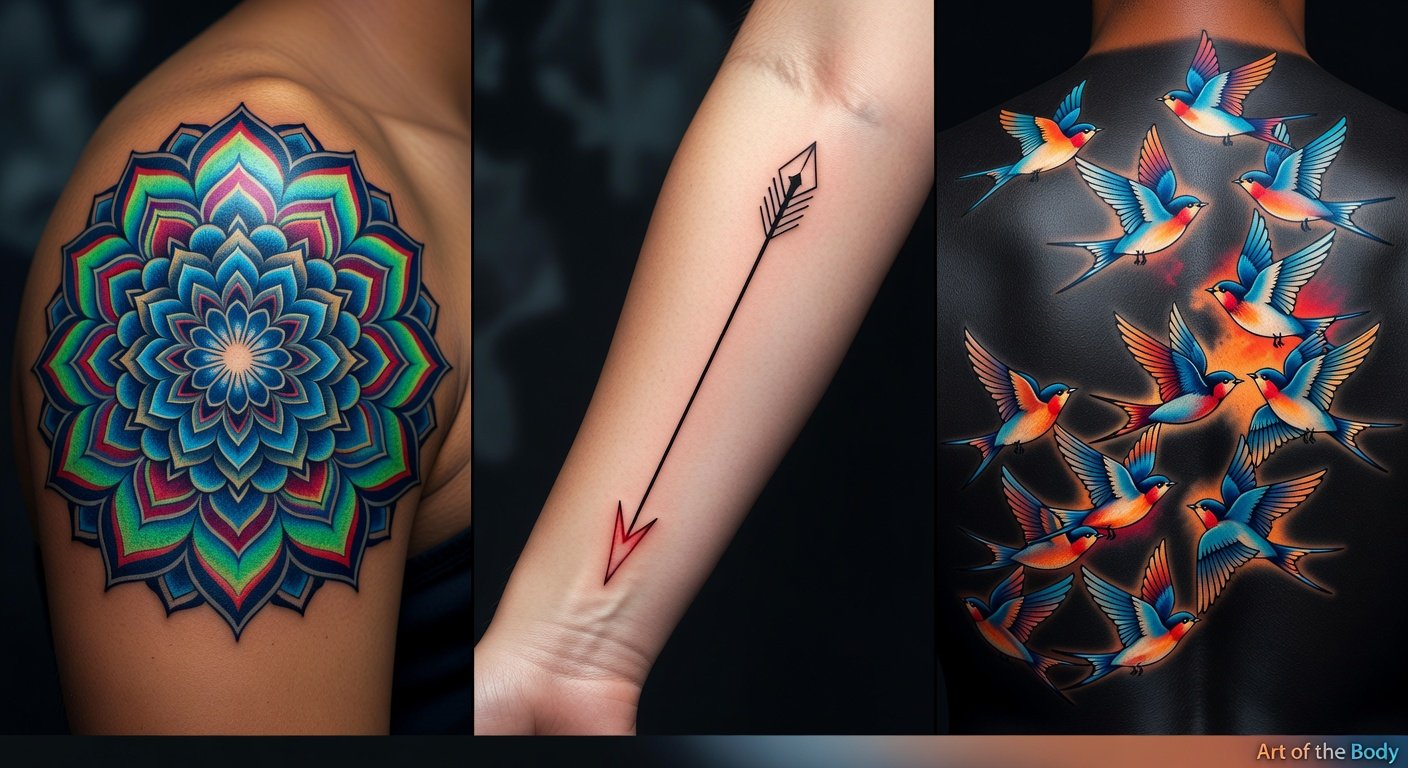
The lotus flower, sacred in Hinduism and Buddhism, blooms pristine from muddy waters, symbolizing purity, enlightenment, and rebirth. In Thai sak yant tattoos, a blooming lotus on the shoulder signifies spiritual growth and overcoming hardship. Petal count matters: eight petals denote the Eightfold Path to Nirvana. These delicate yet resilient blooms are popular for their minimalist elegance on wrists or ribs.
Other Eastern staples include koi fish (perseverance) and cherry blossoms (transience of life), all promoting harmony with the universe.
Western Tattoo Symbols: Grit, Tradition, and Rebellion
Western tattoos emerged from sailor, military, and biker subcultures, favoring bold, straightforward designs that celebrate survival and defiance. Influenced by Old School American style, they prioritize personal triumphs over mysticism.
The Anchor: Stability in Stormy Seas
An anchor tattoo, a hallmark of nautical ink since the 1700s, grounds the wearer amid life's tempests. Sailors got them after crossing the Atlantic, symbolizing safe return home. Today, it represents steadfast love, hope, or sobriety—often with ropes or hearts for added sentiment. Placed on forearms, anchors evoke vintage sailor jerseys.
The Skull: Memento Mori and Defiance
Skulls scream mortality, a reminder to live fully (memento mori). Popularized in biker and punk scenes, they pair with roses (life amid death), daggers (danger), or flames (hellish rebellion). Sugar skulls from Mexican Day of the Dead add colorful festivity, blending death with celebration. A grinning skull on the chest might honor lost comrades or embrace risk.
Western motifs like swallows (loyalty, 5,000 miles flown) and roses (passion) reinforce themes of endurance and raw emotion. For more on tattoo history, check the Britannica entry on tattoos.
Key Differences: Eastern Flow vs. Western Edge
- Philosophy: Eastern symbols focus on cosmic balance and inner peace; Western ones highlight individual grit and external battles.
- Aesthetics: Eastern designs are fluid, colorful, and expansive (full sleeves); Western are bold, black-lined, and compact.
- Placement: Eastern irezumi covers torsos discreetly under clothing; Western flash tattoos shine on visible spots like arms and necks.
- Cultural Context: Eastern ink was once taboo (e.g., yakuza stigma); Western evolved from badges of honor to mainstream art.
Yet similarities exist—both use nature and animals for metaphors of life's journey. 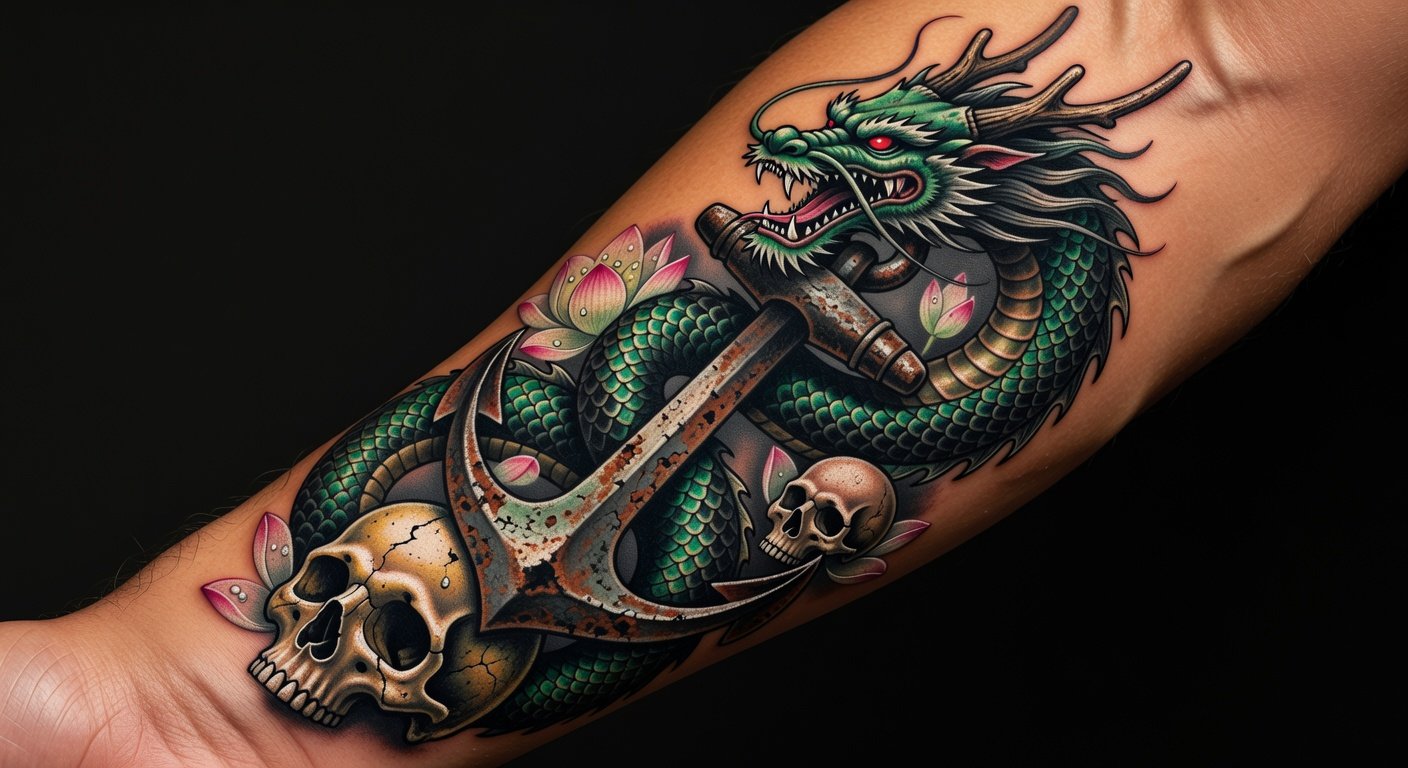
Globalization's Impact: Fusion Tattoos in 2026
By 2026, social media, migration, and travel have dissolved borders. Tattoo artists worldwide fuse traditions, creating hybrid symbols that honor roots while embracing novelty. Neo-traditional styles blend Eastern mysticism with Western boldness.
Modern Fusion Examples:
- Dragon Anchor: A fierce Eastern dragon wrapping an anchor—strength meets stability. Ideal for adventurers blending heritage and career.
- Lotus Skull: A skull emerging from a lotus bloom, merging rebirth with mortality. Perfect for those who've triumphed over trauma.
- Koi Swallow: Persevering koi morphing into loyal swallows, symbolizing global journeys.
- Sak Yant Anchor: Sacred geometry around an anchor, infused with protective spells.
Platforms like Instagram amplify these, with artists in LA sporting Tokyo-inspired sleeves. The Metropolitan Museum of Art showcases how ancient motifs inspire contemporary body art. Expect AI-customized designs and UV-reactive inks pushing boundaries further.
Tips for Selecting Cross-Cultural Tattoo Symbols
Choosing a symbol that transcends cultures requires intention. Here's how:
- Research Deeply: Study origins via books or reputable sites like the Asian Art Museum. Avoid appropriation—consult cultural experts.
- Personal Resonance: What story does it tell yours? A lotus for resilience if you've risen from hardship.
- Artist Expertise: Pick one versed in both styles for authentic fusions.
- Scale and Placement: Large Eastern flows suit backs; punchy Western icons fit hands.
- Future-Proof: Opt for timeless meanings over trends—will it age well in 2036?
- Test Run: Use henna or temporary ink for trials.
Consult your artist for custom tweaks, ensuring the symbol evolves with you.
Conclusion: Ink Your Global Story
Eastern and Western tattoo symbols offer a tapestry of human experience—from dragons' wisdom to anchors' hold. As globalization fuses them in 2026, your tattoo becomes a bridge between worlds. Choose wisely, ink boldly, and wear your story proudly.
No comments yet. Be the first!