 Inked Mythos
Introduction to Negative Space in Tattoo Design
Negative space refers to the unmarked areas of skin that remain untouched by ink, acting as a powerful design element rather than empty background. In advanced tattoo styles like blackwork, realism, and irezumi, mastering negative space transforms flat compositions into dynamic, balanced artworks that interact with the body’s natural contours. This approach elevates tattoos beyond mere shading or color by creating contrast, depth, and breathing room that draws the eye. Searchers interested in this topic often seek practical ways to incorporate these principles into custom designs. Negative space prevents overcrowding, enhances movement, and ensures tattoos age gracefully as skin changes over time. By understanding how voids shape positive forms, artists and clients can achieve tattoos that feel intentional and harmonious rather than dense and overwhelming.
Effective use of negative space also respects the three-dimensional nature of the human body. Skin stretches, folds, and moves, so strategic bare areas allow designs to flex naturally without distortion. This principle applies across cultures and eras, making it a timeless tool for elevating any tattoo concept.
Understanding Negative Space Fundamentals
Negative space works by defining positive elements through absence. In tattooing, this means strategic gaps in linework, shading, or solid fills that shape forms and guide visual flow. Artists use it to imply light, create illusions of dimension, and harmonize with anatomy. For instance, leaving skin bare around focal points can make motifs appear to lift off the body. Key principles include proportion, where negative areas balance dense ink; rhythm, which uses repeating voids for movement; and integration with body curves. These concepts draw from broader art theory, as seen in resources from institutions like the Metropolitan Museum of Art. Additional considerations involve value contrast, where untouched skin acts as the lightest tone against deep blacks, and negative space’s role in directing the viewer’s gaze along intended paths.
Advanced practitioners also account for skin texture and undertones, adjusting void sizes to maintain clarity on varied complexions. This foundational knowledge prevents designs from becoming visually cluttered or losing impact after healing.
Negative Space in Blackwork Tattoos
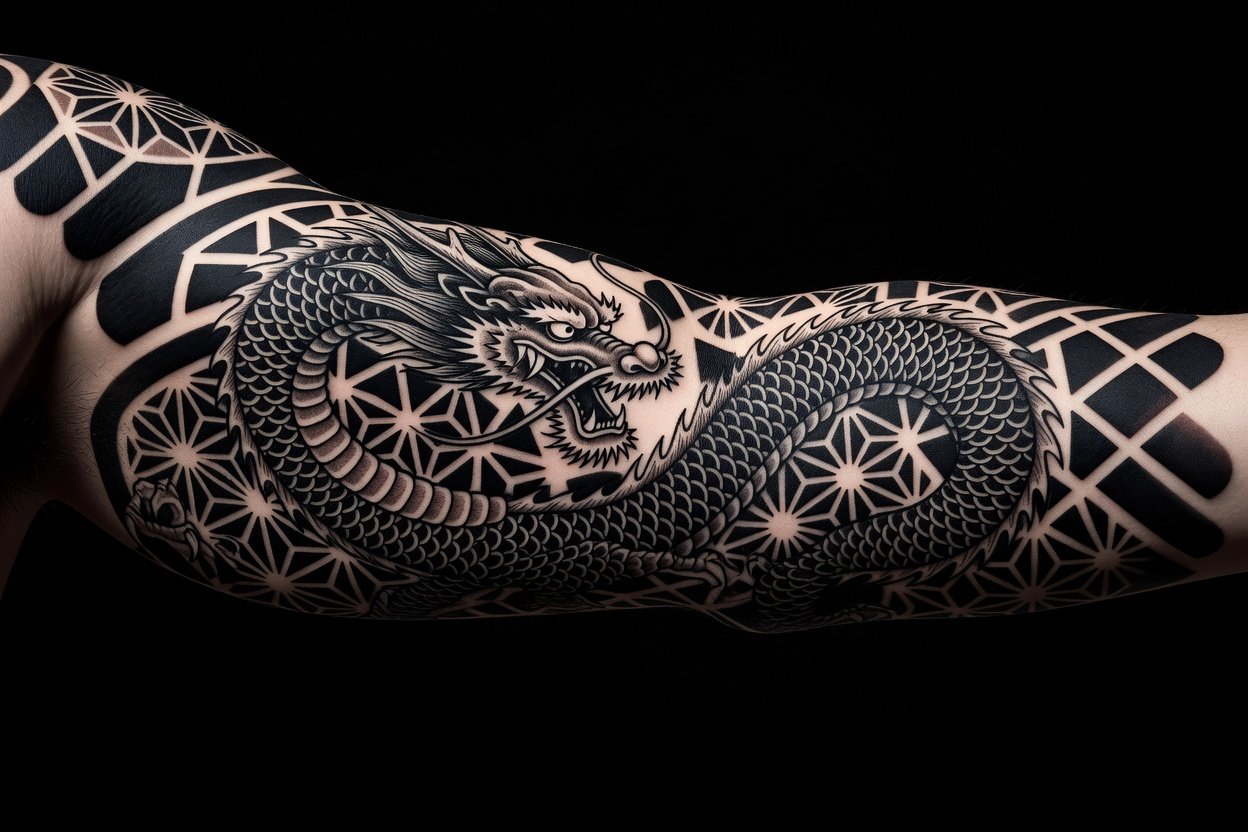
Blackwork relies on bold lines, geometric patterns, and solid black fills. Negative space here creates high-contrast patterns, such as mandalas where untouched skin forms intricate latticework. Contemporary blackwork often blends dotwork with voids to suggest texture without over-inking. Examples include sleeve designs where negative bands separate motifs, preventing visual fatigue. Real case references show how artists like those specializing in ornamental blackwork use negative space to mirror cultural motifs while respecting skin tone variations. In one documented forearm piece, alternating thick black bands with precise negative strips created a woven effect that emphasized the wrist’s movement. Another back panel used large negative fields to frame central sacred geometry, allowing the design to breathe across the spine.
Practitioners note that blackwork negative space must be calculated to the millimeter, as even slight imbalances become obvious under direct light. This style benefits greatly from the technique because solid fills can otherwise feel heavy without relief.
Negative Space in Realism Tattoos
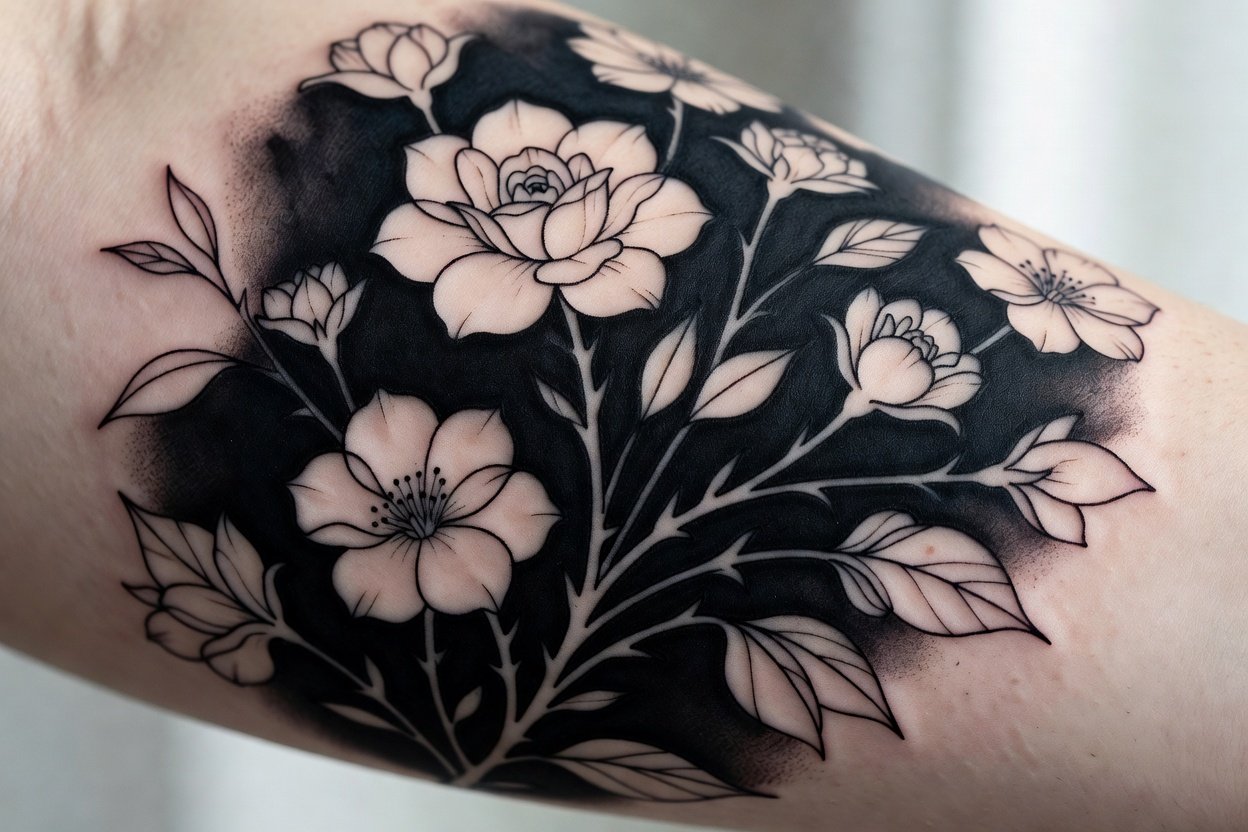
Realism demands photorealistic detail through gradients and micro-shading. Negative space in this style simulates highlights and reflections, such as leaving skin exposed to represent light glinting off water or metallic surfaces in portraits. This technique avoids muddy results from excessive black ink. Practical applications involve planning compositions around natural light sources on the body. Case studies of chest pieces demonstrate how strategic voids enhance three-dimensionality in animal or human subjects. A notable example is a hyper-realistic lion portrait where negative space formed the mane’s outer glow and eye reflections, giving the piece lifelike depth without additional white ink. On ribs, artists have used negative space to depict fabric folds in clothing, relying solely on surrounding shading to imply volume.
Realism artists often photograph reference models under specific lighting to map exact negative zones before transferring stencils. This ensures the final tattoo captures authentic light play that evolves with the wearer’s posture.
Negative Space in Irezumi Tattoos
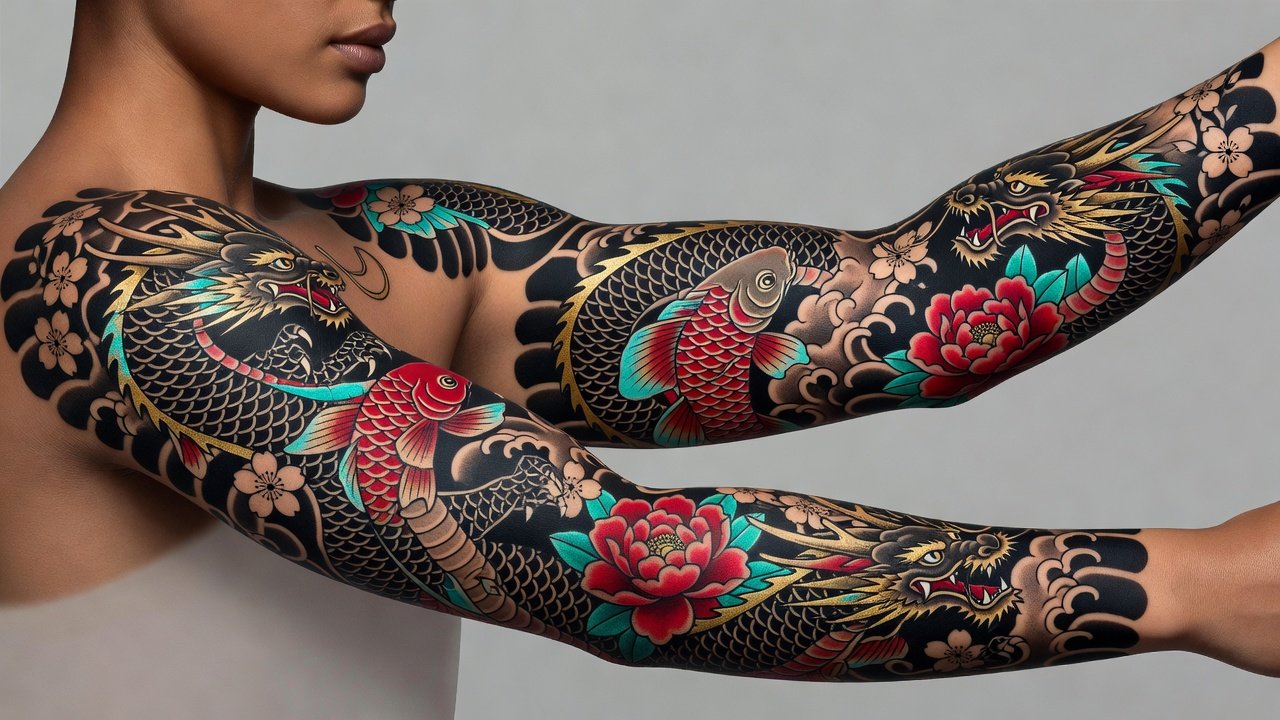
Irezumi, rooted in Japanese tradition, features bold outlines, vibrant fills, and symbolic elements like dragons or waves. Negative space here provides essential breathing room amid dense imagery, allowing backgrounds of wind bars or clouds to emerge from bare skin. Modern interpretations adapt this for full-body suits where voids prevent overcrowding. Comparisons reveal traditional irezumi uses negative space more sparingly for cultural symbolism, while contemporary versions expand it for Western body proportions. The Britannica entry on tattoo art offers historical context on these evolutions. In traditional irezumi, negative areas often represent mist or empty sky between koi and lotus elements, preserving the mythical narrative flow. Contemporary irezumi sleeves may incorporate larger negative zones to integrate with blackwork accents, creating hybrid styles popular in Western studios.
Artists working in this genre emphasize that negative space must align with the body’s energy lines, known as “ki,” to maintain the tattoo’s spiritual resonance.
Practical Steps for Planning Negative Space
Follow these detailed steps when conceptualizing a custom piece:
- Assess body placement and movement to identify natural negative zones by having the client flex and rotate the area during consultation.
- Sketch thumbnails emphasizing voids alongside inked areas, starting with 50% negative space and adjusting iteratively.
- Experiment with contrast levels using digital mockups on layered software to simulate healed appearance under different lighting.
- Test scale on skin with stencils to ensure balance, marking voids with washable markers before committing ink.
- Iterate based on how light interacts with proposed gaps, photographing the area at multiple angles for review.
- Factor in aging by slightly enlarging negative zones to compensate for potential ink spread over years.
These steps help avoid common pitfalls like uneven distribution and ensure the design remains legible for decades.
Traditional vs Contemporary Applications
Traditional approaches in blackwork and irezumi prioritize symmetry and cultural motifs with minimal voids to honor historical constraints. Contemporary styles across all three genres leverage negative space for abstraction, asymmetry, and personalization. The shift allows greater client input while maintaining technical integrity. Traditional blackwork from Pacific Island influences often leaves negative space in repeating geometric voids that hold spiritual meaning. Modern realism, by contrast, treats negative space as a photographic tool for highlights. Irezumi hybrids now frequently merge both, using negative space to separate color-saturated sections from monochrome realism inserts.
Client-Artist Collaboration Tips
Effective collaboration starts with clear reference sharing focused on negative space examples. Clients should communicate desired mood and body flow preferences early. Artists benefit from discussing healing expectations, as negative areas can highlight skin texture changes. Multiple consultations ensure the final design respects both vision and anatomy. Bring mood boards that isolate negative space usage, and request test sketches that show void placement at actual size. Discuss aftercare routines specific to high-contrast areas to prevent ink migration into negative zones. This partnership yields tattoos that feel co-created and technically sound.
Visual Breakdowns and Case References
Analyzing specific tattoos reveals how a back piece in mixed styles uses a central negative void to anchor surrounding elements. Another forearm realism example employs negative highlights to capture fabric folds. A full irezumi leg suit demonstrates how negative space between wave patterns creates implied motion. These references underscore the importance of scale and proportion in execution, showing that successful negative space often accounts for 35-45% of the total design area depending on style density.
Common Mistakes to Avoid
Many designs fail when negative space is an afterthought rather than a core element. Overusing tiny voids leads to loss of definition after healing. Ignoring body curvature can make negative areas appear warped. Failing to test under natural light often results in flat-looking results. Always review healed portfolios from the chosen artist to confirm their negative space handling matches expectations.
FAQ: Avoiding Common Design Pitfalls
- How much negative space is too little? Overcrowding leads to loss of definition; aim for at least 30% bare skin in dense styles.
- Does negative space affect longevity? Yes, it reduces ink saturation stress, helping tattoos retain clarity longer.
- Can it work on all skin tones? Absolutely, with adjustments to line weight and shading depth.
- What if the design feels unbalanced? Revisit thumbnails and consult your artist for adjustments.
- Should negative space be consistent in size? Vary it intentionally to create focal points and rhythm.
- How does placement affect negative space choices? High-movement areas like elbows require larger voids to maintain shape.
Conclusion
Mastering negative space unlocks sophisticated results in blackwork, realism, and irezumi tattoos. By integrating these principles through thoughtful planning and collaboration, enthusiasts achieve pieces that feel alive on the skin. Apply these insights to elevate your next concept from concept to timeless body art.
No comments yet. Be the first!