 Inked Mythos
Introduction to Blackwork and Realism Tattoos
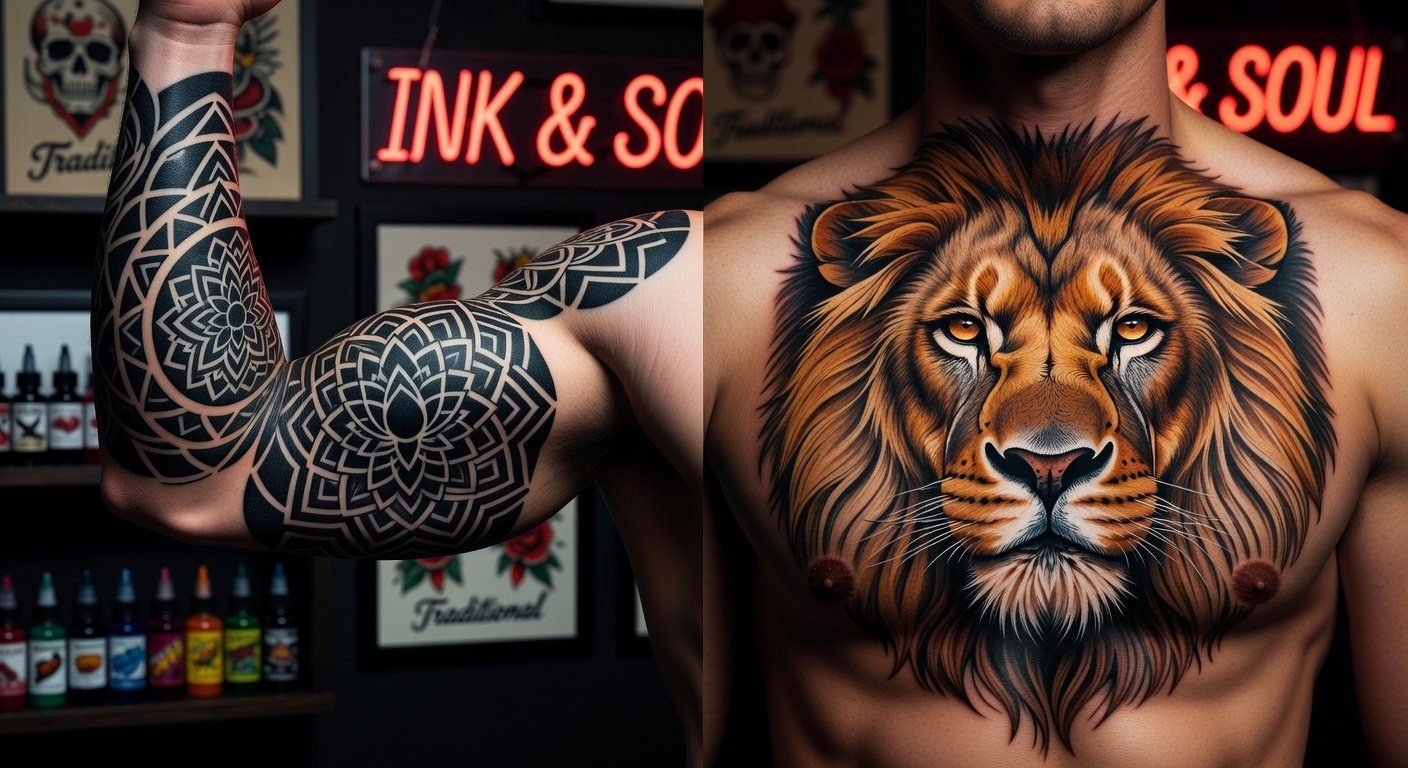
Tattoos have evolved into a vibrant form of self-expression, with styles like blackwork and realism leading the charge in modern body art. Blackwork tattoos use bold black ink and geometric patterns for striking, high-contrast designs, while realism tattoos mimic lifelike portraits and scenes with intricate shading and color. Both offer unique visual appeal, but how do they stack up against traditional irezumi? This guide compares techniques, highlights differences, shares 2026 trend predictions, care tips, and artist spotlights to help you choose your ideal style.
Techniques in Blackwork Tattoos
Blackwork relies on solid black ink fills, negative space, and precise line work. Artists use techniques like whip shading, stippling, and packing to create depth without color. This style draws from tribal and sacred geometry influences, emphasizing bold outlines and dense shading for a dramatic effect.
- Whip shading: Long, fluid strokes for smooth gradients.
- Stippling: Tiny dots for texture and dimension.
- Packing: Multiple needles to saturate skin evenly.
Popular motifs include mandalas, skulls, and abstract patterns, making blackwork ideal for bold statements on arms, backs, or thighs.
Techniques in Realism Tattoos
Realism demands hyper-detailed precision, using fine liners, gradient shading, and color blending to replicate reality. Artists employ magnum needles for smooth shading and single needles for crisp details, often incorporating skin tones for photorealistic results.
- Gradient shading: Seamless transitions from light to dark.
- Color packing: Layering hues for lifelike vibrancy.
- Dotwork accents: Enhancing textures like fur or fabric.
Common subjects are portraits, animals, and eyes, perfect for memorial pieces or hyper-realistic sleeves.
Visual Appeal: Blackwork vs Realism
Blackwork captivates with its minimalist intensity and versatility across skin tones—bold lines pop against any canvas. Realism, however, mesmerizes through illusion, fooling the eye with depth and emotion. Blackwork ages gracefully with less color fade, while realism may require touch-ups to maintain sharpness.
Blackwork suits minimalists seeking graphic impact; realism appeals to those craving narrative depth.
Differences from Irezumi Traditions
Irezumi, Japan's traditional tattoo art, contrasts sharply with Western styles. Rooted in ukiyo-e woodblock prints, irezumi features full-body suits with mythical creatures like dragons and koi, using tebori (hand-poking) for textured ink flow. Unlike blackwork's geometry or realism's photorealism, irezumi emphasizes asymmetry, bold colors, and cultural symbolism tied to yakuza history.
Key differences:
- Application: Tebori vs. machine—irezumi is ritualistic and painful.
- Design: Narrative flow covering the body vs. standalone pieces.
- Cultural context: Taboo in Japan, celebrated globally. For deeper history, explore collections at the Metropolitan Museum of Art.
While blackwork and realism prioritize individual expression, irezumi demands holistic commitment.
2026 Tattoo Trend Predictions
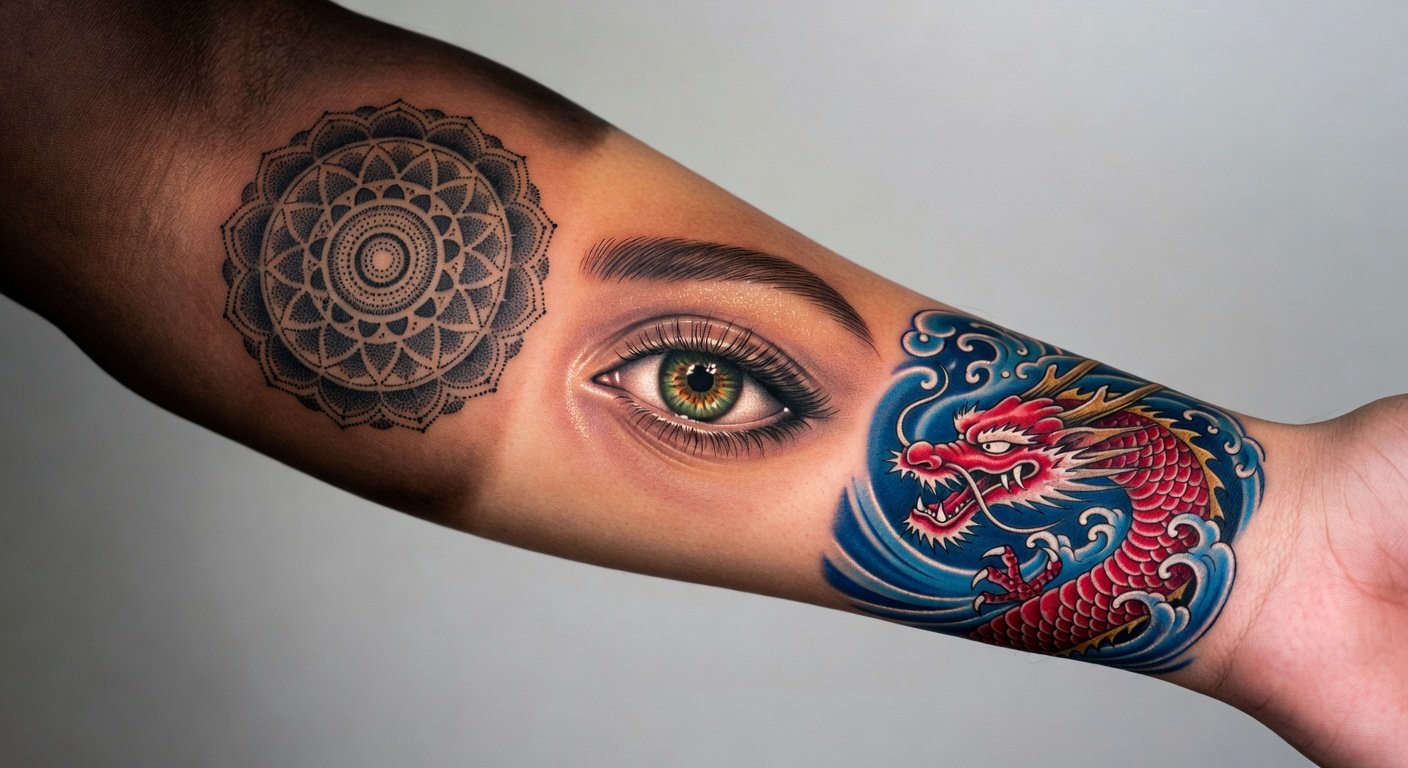
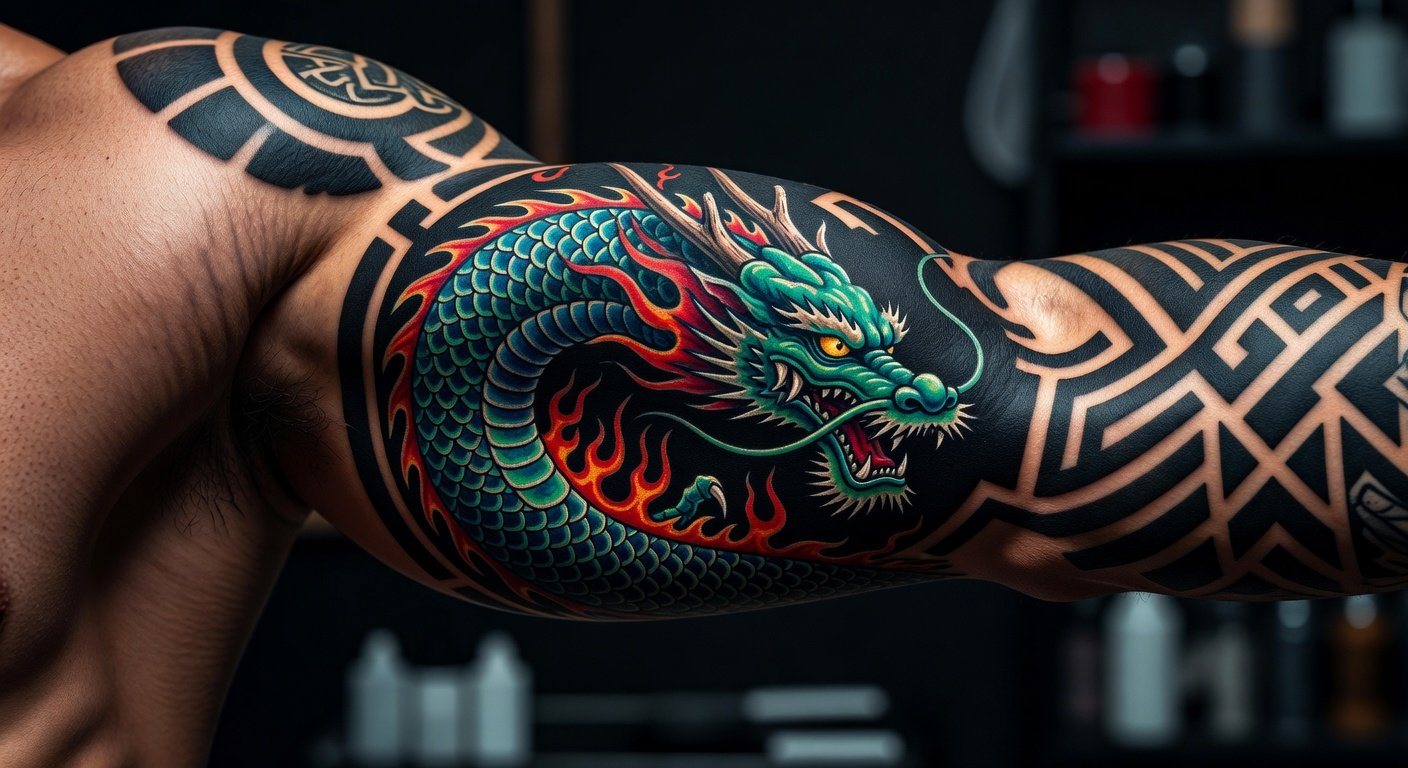
Looking to 2026, blackwork evolves with neo-blackwork—subtle color pops in negative space. Realism trends toward surrealism hybrids, blending photoreal eyes with dreamscapes. Fusion styles rise: blackwork realism sleeves or irezumi-inspired blackwork dragons.
- Blackwork: Organic shapes, floral geometrics.
- Realism: UV-reactive inks for glow effects.
- Fusions: Irezumi motifs in realistic shading.
Sustainability drives eco-inks, and AI-generated designs personalize further.
Care Tips for Long-Lasting Ink
Proper aftercare ensures vibrancy. Wash with fragrance-free soap, moisturize with unscented lotion, and avoid sun exposure. Blackwork needs less upkeep than colorful realism.
- Days 1-3: Keep covered, apply thin ointment.
- Weeks 1-4: Gentle cleansing, no pools.
- Long-term: SPF 50+, hydrate skin. For safety guidelines, check FDA Cosmetics.
Artist Spotlights and Real Examples
Blackwork: Mo Ganji's dotwork masterpieces turn skin into cosmic maps—see his geometric skulls.
Realism: Nikko Hurtado's hyper-real portraits, like lifelike lions, showcase shading mastery.
Irezumi fusion: Horiyoshi III's traditional dragons inspire modern blackwork adaptations.
Real examples: A blackwork mandala armband vs. a realism wolf portrait on the chest. Fusion idea: Realistic koi in blackwork waves for personalized heritage nods.
Fusion Ideas for Modern Personalization
Mix styles for uniqueness: Blackwork outlines with realism fills, or irezumi waves framing photoreal faces. These hybrids offer cultural depth with contemporary edge.
Choosing your style? Assess pain tolerance (blackwork packs denser), canvas size, and lifestyle. Consult artists for custom sketches.
Conclusion: Ink Your Story
Whether bold blackwork, lifelike realism, or irezumi echoes, tattoos are timeless art. Embrace 2026 trends and care wisely for ink that endures.
No comments yet. Be the first!