 Inked Mythos
Introduction to Sacred Geometry Tattoos
Sacred geometry tattoos draw from ancient patterns found in nature, architecture, and spiritual traditions worldwide. These designs appeal to those seeking tattoos with deeper symbolism rather than fleeting trends. In 2026, they continue to gain popularity for their balance of visual complexity and personal meaning, helping wearers express beliefs about the universe, interconnectedness, and personal growth. Many people choose these tattoos because the underlying mathematics reflects the same proportions seen in everything from flower petals to planetary orbits, creating a sense of timeless connection.
Unlike simple symbols, sacred geometry incorporates precise mathematical ratios that mirror natural forms such as honeycombs, snowflakes, and galaxies. This makes each tattoo a reminder of universal harmony. Artists often render these patterns in blackwork for bold impact, fine line for subtlety, or with minimal color accents to highlight specific elements. The resurgence in 2026 ties into broader interests in mindfulness and ancient wisdom practices that emphasize structure and balance over chaos.
Core Shapes and Their Symbolic Meanings
Understanding the roots of these designs enhances their value as tattoo choices. Many trace back to ancient cultures including Egyptian, Greek, and Hindu traditions. Each shape carries layers of interpretation that can be adapted to modern personal narratives, allowing wearers to encode stories of resilience, creation, or cosmic order into their skin.
The Flower of Life
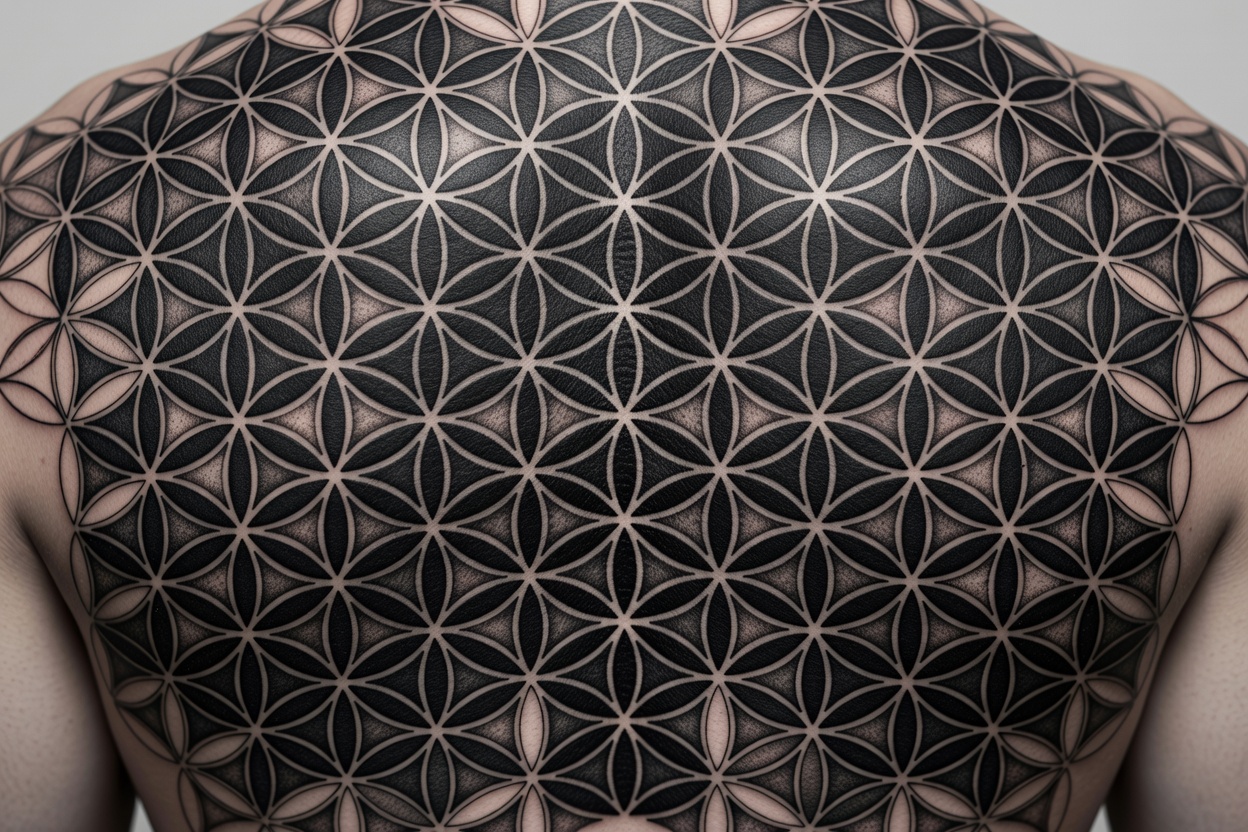
This overlapping circle pattern represents creation and the cycle of life. Its cultural roots appear in Egyptian temples and Renaissance art. A tattoo of the Flower of Life can symbolize new beginnings or spiritual awakening. The pattern consists of 19 circles arranged in a hexagonal lattice, and its study reveals connections to the golden ratio found throughout biology and physics. Wearers often report that the design serves as a daily meditation on interconnectedness.
Metatron's Cube
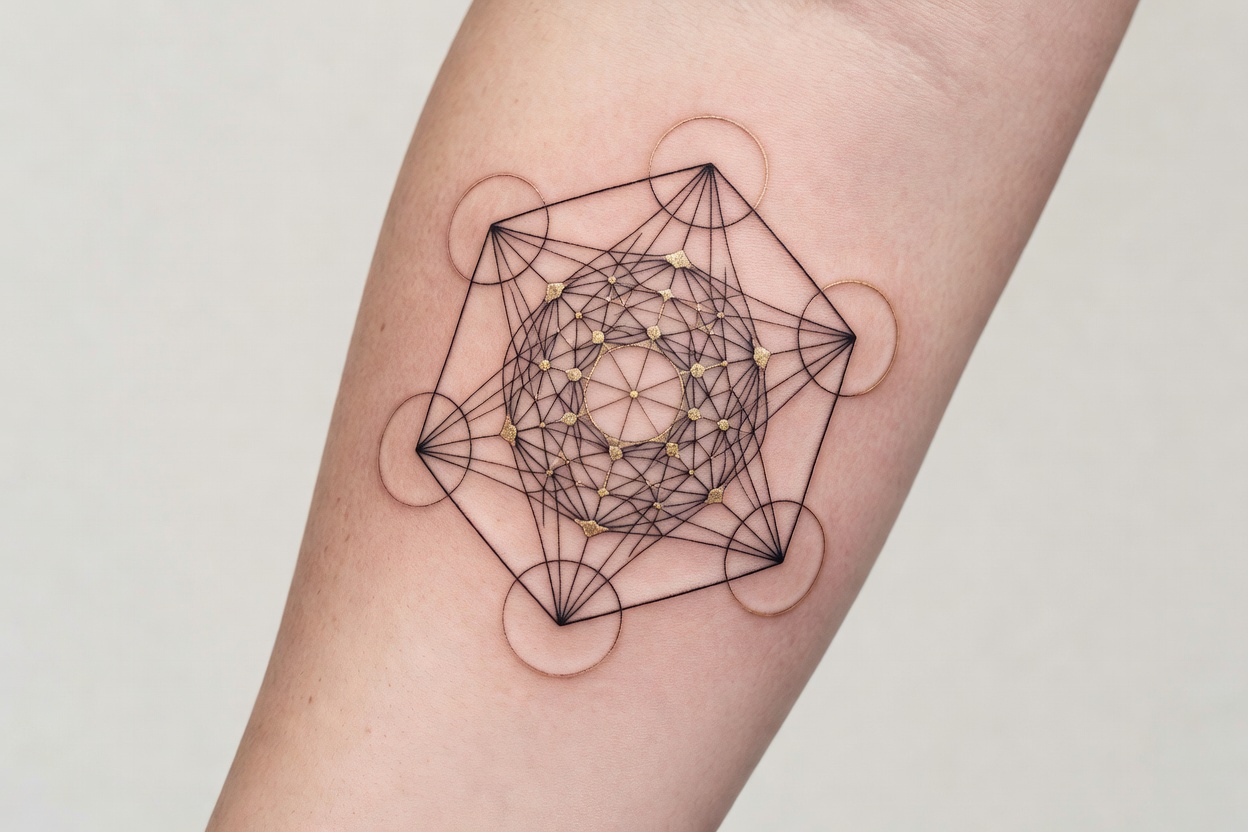
Derived from the Fruit of Life, this cube contains all five Platonic solids. It embodies balance and protection in Jewish mysticism. Wearers often choose it to mark transitions or personal protection journeys. The cube's lines connect centers of circles in a three-dimensional projection that artists translate into flat tattoo surfaces using careful perspective techniques.
The Seed of Life and Tree of Life
These simpler variations focus on growth and connection. The Seed of Life uses seven circles to represent the seven days of creation, while the Tree of Life links to Kabbalistic traditions of spiritual ascent. Both patterns lend themselves well to smaller placements where detail remains visible without overwhelming the skin area.
Sri Yantra and Vesica Piscis
The Sri Yantra features interlocking triangles for manifestation energy from Hindu practices. The Vesica Piscis, formed by two overlapping circles, symbolizes the intersection of worlds and feminine divine energy. These shapes allow for creative fusion with other cultural motifs while preserving geometric precision.
8-10 Visual Examples and Style Variations
Here are ten distinct approaches to sacred geometry tattoos, showing how artists adapt core patterns across different body types and artistic preferences:
- Full-back Flower of Life in intricate blackwork with negative space shading that creates depth and movement across the shoulder blades.
- Metatron's Cube on the forearm using fine line technique and subtle gold accents that catch light during daily activities.
- Minimal Seed of Life behind the ear in single-needle style for discretion and quick healing times.
- Geometric Tree of Life sleeve combining realistic bark textures with sacred lines for a hybrid organic feel.
- Sri Yantra chest piece with soft watercolor highlights in earth tones that soften the sharp geometry.
- Vesica Piscis ankle tattoo in delicate dotwork for feminine symbolism and easy concealment.
- Hybrid design merging Platonic solids into a mandala on the thigh that flows with muscle contours.
- Blackout background with white-ink Metatron's Cube for high-contrast effect on darker skin tones.
- Upper arm band featuring overlapping circles in neo-traditional coloring with bold outlines.
- Spine-aligned Flower of Life with micro-details for elongated flow that follows natural body curves.
These examples demonstrate versatility across body placements and artistic approaches, from large statement pieces to subtle accents that integrate with existing tattoos.
Tools and Techniques Artists Use for Precision
Creating accurate sacred geometry requires specialized methods. Professional tattooers often begin with digital software to calculate proportions before transferring stencils. Some still rely on traditional compass and ruler techniques to maintain perfect symmetry on the skin. Fine line specialists use rotary machines with smaller needle groupings, while blackwork artists favor coil machines for solid saturation. Understanding these processes helps clients communicate expectations during consultations.
Steps to Customize Sacred Geometry Tattoos
Personalization ensures the design reflects your unique story. Follow these practical steps to create a meaningful piece:
- Research core meanings and select shapes that align with your beliefs or experiences, perhaps cross-referencing historical references at Britannica.
- Consult an artist experienced in geometric precision to maintain symmetry throughout the session.
- Incorporate personal elements like birth dates encoded in ratios or family symbols within negative space.
- Choose scale and placement based on visibility preferences and pain tolerance for different body zones.
- Review mockups with different line weights and shading options before committing to ink.
- Consider how the design will age by discussing ink density and skin movement with your chosen professional.
Comparing Sacred Geometry to Minimalist and Realistic Styles
Minimalist tattoos favor clean lines and simplicity, offering quick healing and broad appeal but sometimes lacking layered meaning. Realistic styles capture lifelike detail, suiting portraits or nature scenes, yet require more maintenance and larger canvases. Sacred geometry bridges both worlds by delivering intricate detail through mathematical harmony, making it more versatile for smaller placements while retaining symbolic depth. Those prioritizing meaning over photorealism often prefer geometry for its timeless quality that resists stylistic dating. When deciding, consider how each style interacts with your lifestyle, wardrobe, and long-term skin changes.
Mistakes to Avoid When Choosing Sacred Geometry Tattoos
Common pitfalls include selecting overly complex designs for small body areas, which can blur over time. Another frequent error is skipping artist research and ending up with asymmetrical results. Clients sometimes overlook aftercare during the planning phase, leading to faded lines. Always verify that your chosen pattern holds personal significance rather than copying popular social media images without adaptation.
FAQ: Pain, Placement, and Aftercare
How painful are sacred geometry tattoos?
Pain varies by placement and individual tolerance. Bony areas like ribs or spine tend to feel sharper, while fleshy spots like thighs offer more comfort. Sessions typically last 2-4 hours depending on complexity, and many artists offer numbing options for longer work.
Where can these designs be placed?
Versatile options include wrists for daily visibility, backs for large mandalas, or ribs for private symbolism. Artists recommend testing symmetry on curved body areas to ensure lines remain straight after the skin settles.
What aftercare ensures longevity?
Clean the area gently, apply fragrance-free moisturizer, and avoid sun exposure. Follow your artist's specific instructions for optimal ink retention over years, including touch-up schedules if lines begin to soften.
Do sacred geometry tattoos require special maintenance compared to other styles?
They follow standard aftercare but benefit from consistent moisturizing to preserve fine lines. Regular check-ins with your artist every few years can address any minor fading from sun or aging skin.
Conclusion
Sacred geometry tattoos offer profound symbolism rooted in ancient wisdom while fitting modern aesthetics. By exploring core patterns, customizing thoughtfully, and comparing styles, you can select a design that resonates personally and endures visually. Consult professional artists to bring these ideas to life with precision and care, ensuring your tattoo remains a meaningful companion for decades.
No comments yet. Be the first!