 Inked Mythos
Introduction to Cohesive Full Sleeve Tattoos in 2026
Full sleeve tattoos represent one of the most ambitious forms of body art, covering the arm from shoulder to wrist in a unified design. In 2026, the focus shifts toward thematic cohesion that blends upper and lower arm sections seamlessly. Search trends highlight demand for tattoo ideas that incorporate forward-looking motifs drawn from nature and technology, ensuring the piece feels intentional rather than piecemeal. A well-executed sleeve tells a story that evolves from the shoulder down through the forearm, using repeating visual threads such as color harmony, recurring shapes, and symbolic transitions. This approach avoids generic results by emphasizing personalization at every stage, allowing wearers to create something that reflects their individual experiences and forward-thinking outlook.
Successful full sleeves require careful planning to maintain visual flow across skin contours and movement. Artists and clients alike benefit from understanding how light, shadow, and body mechanics influence the final appearance. In the coming year, motifs that fuse organic elements with technological precision continue to dominate, providing endless opportunities for creative expression that feels both timeless and cutting-edge.
Planning Steps for Thematic Cohesion
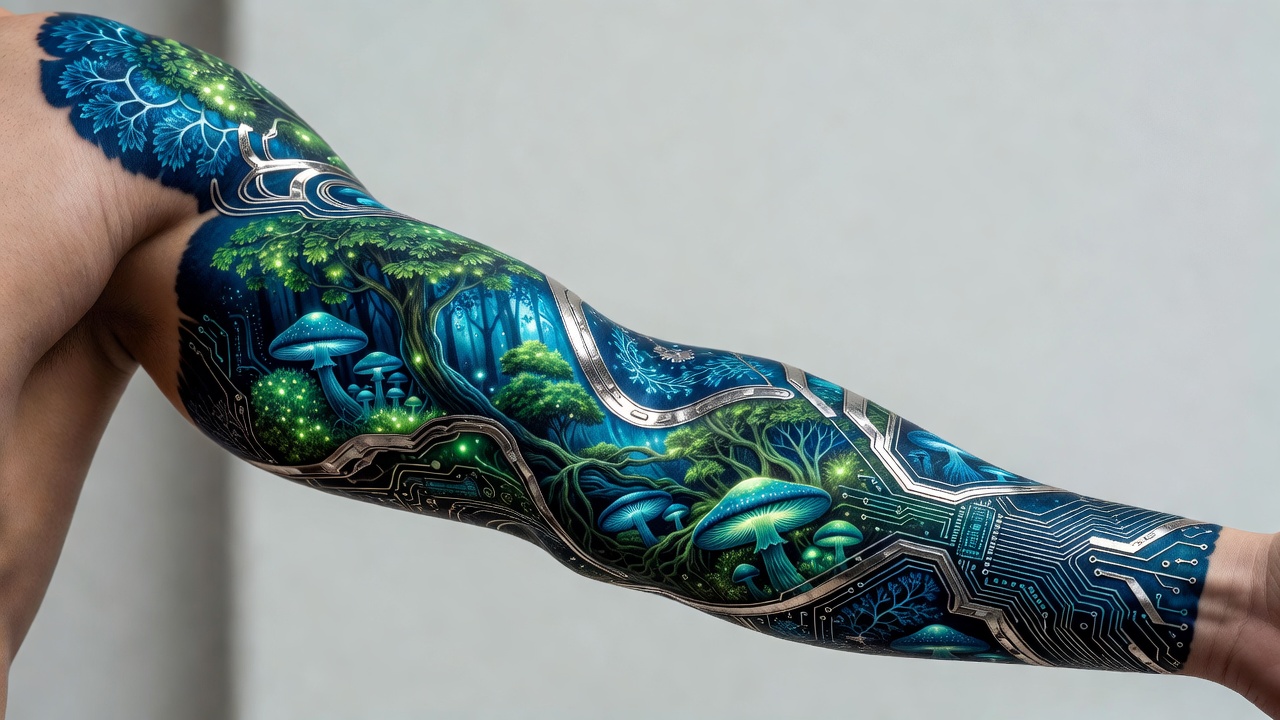
Begin by mapping your arm into zones: the upper arm (shoulder to elbow) often hosts larger focal elements, while the lower arm (elbow to wrist) supports finer details that extend the narrative. Choose a core theme early—such as a bioluminescent ecosystem merging with digital circuits—to guide motif selection across both sections. Next, research reference materials from nature photography and technological schematics to build a mood board that informs every decision.
Sketch rough layouts on paper or digital tools before committing. Consider skin movement and how designs wrap around the elbow and forearm contours for natural continuity. Break the project into phases: outline the primary shapes first, then layer secondary elements, and finally add shading and color. Research 2026-forward elements like quantum-inspired patterns or climate-adaptive flora to keep the work contemporary. Test color palettes on temporary skin to evaluate how they interact under different lighting conditions. Finally, schedule a consultation with your chosen artist to refine the blueprint, ensuring every section connects logically without abrupt visual breaks.
Style Comparisons: Illustrative Versus Abstract Approaches
Illustrative styles excel at storytelling with realistic shading and defined lines, making them ideal for detailed nature scenes that flow into technological overlays. These designs often feature lifelike textures such as bark, feathers, or water droplets that gradually incorporate metallic sheens and geometric precision. Abstract approaches use geometric forms and negative space for a more interpretive, futuristic feel that suits minimalist tech integrations, relying on bold shapes and color fields to convey motion and energy.
Illustrative sleeves often require more sessions due to layering and fine detailing, while abstract designs can achieve impact with bolder color blocks and fewer passes. Both benefit from hybrid elements to enhance cohesion between arm sections. When deciding between styles, consider your lifestyle and pain tolerance, as illustrative work tends to involve longer sittings with intricate linework. Abstract pieces may heal faster in some cases because of simpler color application. Many clients find that a balanced mix—starting with illustrative focal points and transitioning into abstract backgrounds—creates the most dynamic and personalized results for 2026 themes.
2026 Motifs and Visual Examples
Current trends favor motifs that merge organic growth with synthetic innovation. Here are ten cohesive concepts that maintain arm-to-arm continuity through repeating color palettes and recurring shapes:
- Neural vine networks wrapping from shoulder to wrist with glowing nodes that pulse in coordinated patterns.
- Underwater cyber-reefs featuring mechanical corals and data-stream fish that transition from realistic to pixelated forms.
- Geometric mountain ranges transitioning into circuit-board peaks, using shared angular lines for flow.
- Feathered biomechanical wings that morph into drone silhouettes, blending organic texture with engineered precision.
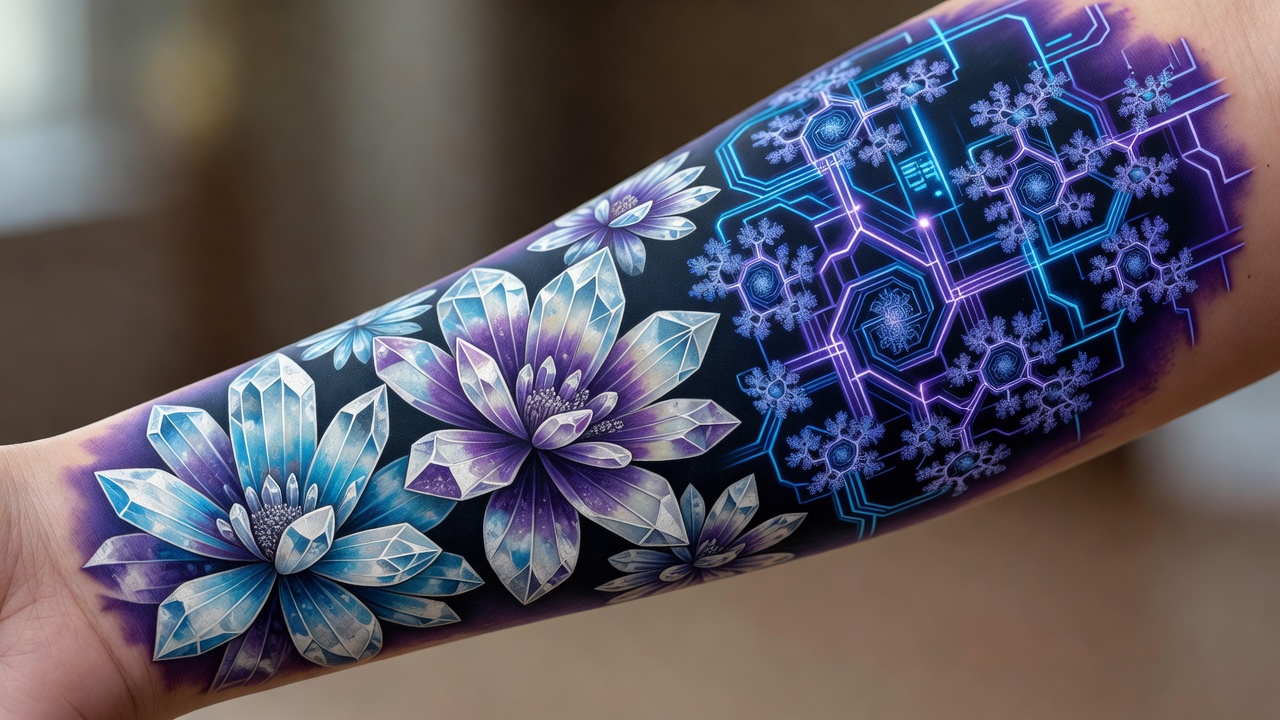
- Crystalline forests where leaves display holographic patterns that echo across both upper and lower sections.
- Stellar ecosystems blending nebulae with satellite constellations, unified by starburst motifs.
- Root systems intertwined with fiber-optic cables, showing growth and connectivity in equal measure.
- Wind-swept dunes revealing embedded microchip fossils that repeat subtle grid patterns downward.
- Avian migration paths overlaid with flight trajectory maps for a sense of movement and purpose.
- Liquid metal flora blooming into digital fractals that mirror the same petal structures throughout the sleeve.
These examples maintain arm-to-arm continuity through repeating color palettes and recurring shapes. Each concept allows for personal tweaks while preserving overall harmony.
Personalization Techniques to Avoid Generic Results
Incorporate personal symbols—such as birthdates encoded in binary or favorite hiking trails rendered as topographic lines—into the larger motifs. Blend nature inspiration like specific regional plants with technology elements representing your profession or hobbies. Consult reference images from scientific sources to add authenticity without copying existing work. One effective method involves embedding micro-narratives: a childhood memory of stargazing rendered as constellations that gradually reveal circuit pathways representing a career in engineering. Another technique is color mapping, where hues drawn from a favorite natural location (ocean blues, forest greens) are paired with metallic accents symbolizing innovation. Collaborate with your artist to scan personal objects or photographs and integrate their essence into the design, ensuring the final piece feels uniquely yours rather than a stock template.
Budgeting Tips and Artist Selection Criteria
Full sleeve projects typically span multiple sessions over months, so allocate time and resources accordingly. Focus on artists whose portfolios demonstrate experience with large-scale cohesive work. Evaluate their ability to adapt 2026 motifs while preserving your unique vision. Review healed examples and ask about aftercare protocols aligned with guidance from authoritative health organizations such as the CDC and Mayo Clinic. Additional criteria include checking for consistent client communication, willingness to provide progress sketches, and membership in professional tattoo associations. When budgeting, prioritize quality over speed by setting aside funds for touch-ups and quality supplies rather than rushing the process.
Mistakes to Avoid When Designing Full Sleeves
Common pitfalls include choosing disconnected themes that fail to bridge upper and lower arm sections, ignoring skin elasticity around joints, and selecting artists based solely on social media without reviewing in-person healed work. Another frequent error is rushing color decisions without testing how pigments interact with individual skin tones over time. Always verify that your chosen motifs scale appropriately from broad shoulder pieces to delicate wrist details.
FAQ on Session Pacing and Healing
How long between sessions?
Allow 4–8 weeks for skin recovery to ensure crisp layering in subsequent work, giving the body time to heal fully before new ink is applied.
What affects healing time?
Proper moisturizing, sun protection, and avoiding irritants speed recovery while maintaining color vibrancy; individual factors like age, diet, and overall health also play significant roles.
Can the design evolve across sessions?
Yes, many artists refine elements based on how the initial work settles, enhancing overall cohesion and allowing adjustments that improve the final flow.
How should I prepare for each session?
Stay hydrated, avoid alcohol the night before, and wear loose clothing to minimize irritation on the tattooed area during and after the appointment.
Conclusion
A cohesive full sleeve in 2026 becomes a wearable narrative when planning prioritizes flow, personalization, and emerging motifs. By comparing styles, selecting the right artist, pacing sessions thoughtfully, and incorporating nature and technology inspirations, the result stands out as truly individual and enduring.
No comments yet. Be the first!