 Inked Mythos
Introduction to Biomechanical Tattoo Mastery in 2026
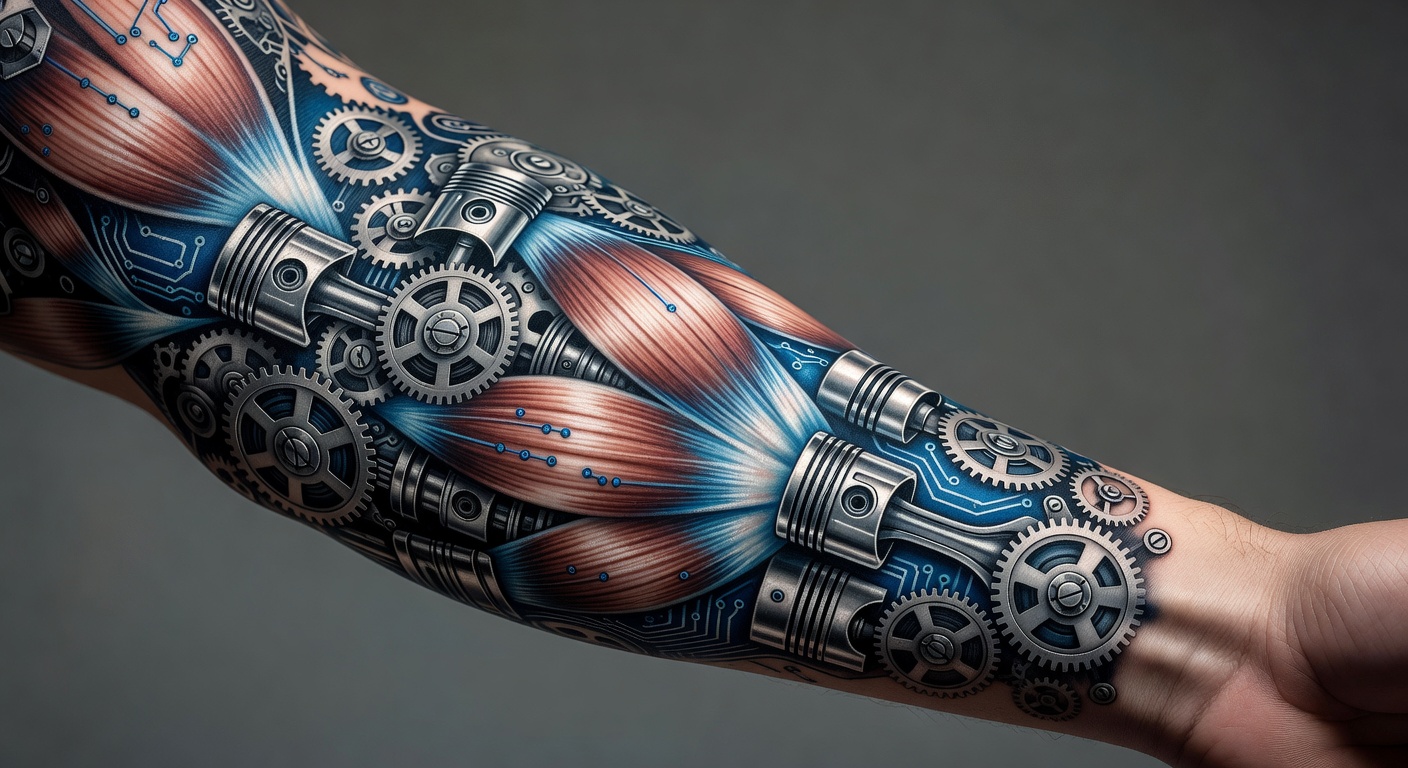
Biomechanical tattoos represent a sophisticated fusion of organic human anatomy and intricate mechanical components, creating visually striking body art that appeals to clients seeking depth and narrative. As tattooing evolves, experienced artists are moving beyond traditional realism and dotwork to explore these hybrid designs. This guide delves into the precise methods used by leading creators to blend flesh-like textures with metallic elements for seamless results that withstand the test of time and body movement. The style draws from science fiction aesthetics while grounding designs in realistic shading and anatomical accuracy, allowing tattoos to appear as if machinery is emerging from or integrated into living tissue.
Essential Tool Selection for Precision and Shading
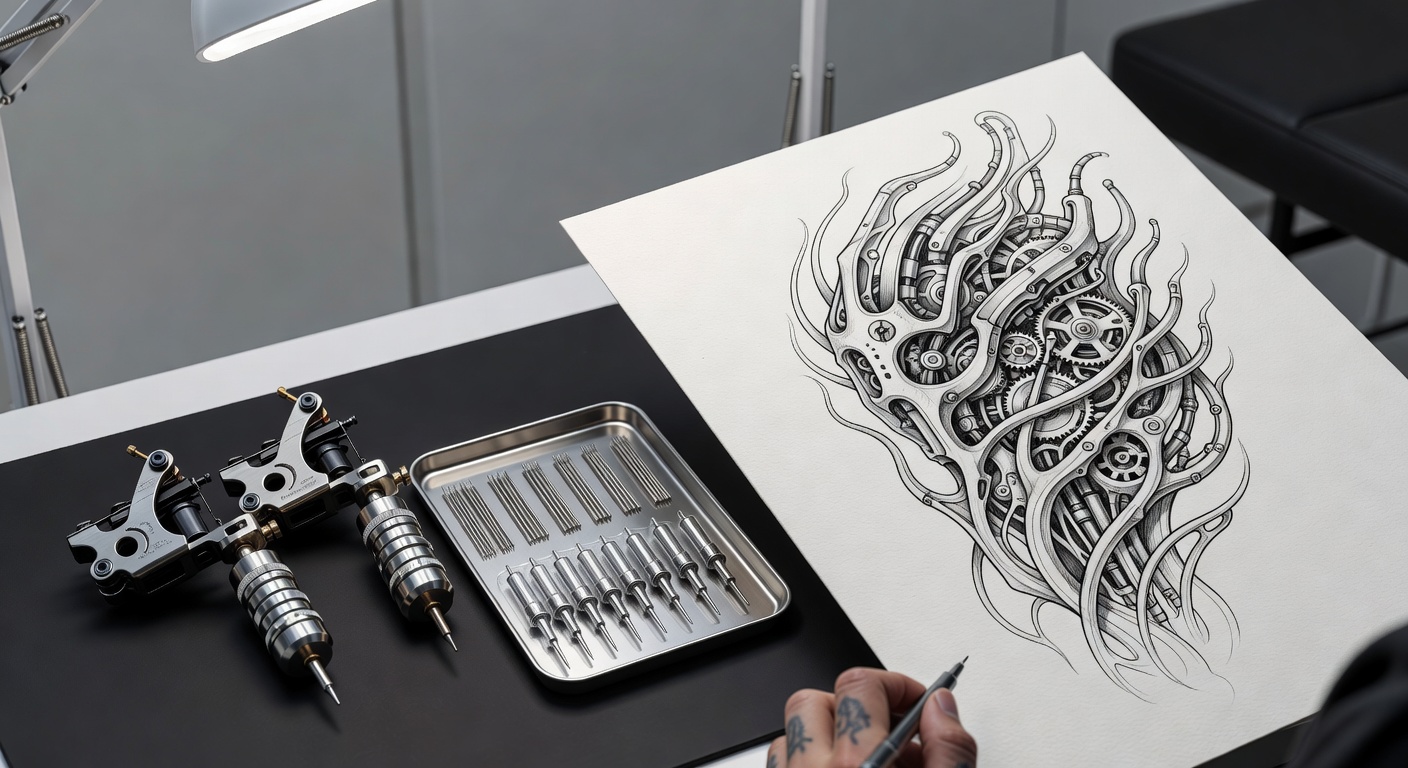
Selecting the right equipment is foundational for achieving the crisp contrasts required in biomechanical work. For line precision, artists rely on rotary machines with fine needles such as 3RL or 5RL configurations to achieve crisp mechanical outlines without excessive trauma to the skin. These needles allow controlled ink deposit along straight edges of pistons and circuit boards. Shading demands versatile magnum needles paired with high-quality inks that allow smooth gradients between organic curves and rigid gear structures. Many professionals compare traditional coil machines, valued for their consistent power in dense packing of black and gray tones, against modern digital pens that offer adjustable stroke lengths for delicate transitions in areas requiring both soft tissue rendering and hard metallic edges.
Practical comparisons show traditional setups excel in heavy saturation for metallic highlights, while digital aids provide superior control during extended sessions on curved body areas like forearms or ribs. Additional tools include specialized stencil papers for transferring complex layered designs and magnifying lamps to ensure every joint and bolt aligns perfectly with surrounding musculature. Artists often maintain a dedicated set of brushes for hand-shading fine details that machines cannot reach, enhancing the illusion of depth where organic and mechanical elements intersect.
Step-by-Step Sketching to Inking Process
The workflow begins with detailed reference gathering, often combining anatomical studies and engineering schematics from multiple sources. Artists sketch initial concepts on paper or tablets, layering organic muscle fibers over pistons and wiring while ensuring the design flows with the client's natural body contours. Digital tools allow rapid iteration of proportions before transferring stencils, reducing errors during the actual tattooing session.
Inking follows a layered approach that demands patience and precision. First, establish bold structural lines using the finest needles to define the mechanical framework. Next, build mid-tones for depth by gradually packing ink into shadowed areas that suggest internal mechanisms beneath the skin. Highlights come last, applied with diluted white or light gray inks to simulate light reflection on metal surfaces and create the three-dimensional pop that defines high-quality biomechanical pieces. A key technique involves strategic use of negative space to suggest internal mechanics beneath skin-like layers, giving the tattoo an X-ray quality that reveals hidden gears and tubes.
Throughout the process, artists pause frequently to assess the design from multiple angles, adjusting pressure and needle angle to match skin texture variations. This methodical progression ensures the final result maintains visual coherence whether viewed up close or from a distance.
Color Theory Applications in Fusion Designs
Effective biomechanical work hinges on advanced color theory to create believable integration between living tissue and artificial components. Cool blues, silvers, and gunmetal grays evoke machinery and industrial materials, while warm earth tones and subtle pinks ground the organic elements in realism. Artists apply split-complementary schemes, pairing deep reds with teal accents, to create contrast that draws the eye across the composition and emphasizes the tension between flesh and steel.
Understanding undertones ensures the design ages gracefully as ink settles and skin changes over years. For instance, placing cool tones in recessed mechanical areas prevents them from appearing flat, while warmer hues on raised organic sections enhance the sense of volume and vitality. Many creators test color palettes on practice skins before committing to the client's body, allowing adjustments that account for individual skin tones and undertones.
Real-World Case Studies from Prominent Creators
Legendary artists like those featured in international conventions demonstrate these fusions through large-scale back pieces where spinal columns morph into hydraulic systems complete with visible fluid lines and riveted plates. One notable example involved a full sleeve where the client's forearm muscles transitioned into articulated robotic joints, achieved by careful mapping of each muscle group to corresponding mechanical parts during multiple sessions. Their processes emphasize client collaboration for personalized elements such as incorporating specific mechanical motifs tied to hobbies or professions, resulting in tattoos that tell individual stories through the biomechanical lens.
Another case featured a chest piece blending a human heart with exposed engine components, using color gradients to simulate blood vessels merging into fuel lines. These real-world applications highlight how technical skill combines with creative vision to produce wearable art that evolves with the wearer's movements.
Traditional Versus Digital Design Aids Compared
Traditional freehand methods foster organic flow and allow spontaneous adjustments but require exceptional skill for maintaining symmetry across complex mechanical patterns. Digital aids like tablets enable precise scaling, overlays, and easy revisions, reducing overall revision time during the planning phase. Many studios now hybridize both approaches, beginning with digital mockups for client approval before moving to freehand refinements on the skin itself. This combination maximizes accuracy while preserving the artistic intuition that makes each biomechanical tattoo unique.
Body Placement Considerations and Common Mistakes to Avoid
Placement significantly impacts the success of biomechanical designs. Areas with high movement, such as elbows or knees, require extra attention to how the fusion elements stretch and compress. Artists recommend mapping the design across multiple body positions during consultation to avoid distortion. Common mistakes include overcrowding details without sufficient negative space, which can cause the tattoo to lose definition as it heals, or mismatched line weights that break the illusion of integrated machinery. Avoiding these pitfalls involves thorough planning and test placements on similar body areas beforehand.
Addressing Client Concerns: Healing and Customization
FAQ
- How long does healing take? Typical recovery spans 2-4 weeks with proper aftercare, varying by placement and individual skin response. Consult resources like Mayo Clinic for general skin healing guidance.
- Can designs be customized? Absolutely—artists adapt elements to body contours and personal stories for unique results that reflect individual interests.
- What maintenance is required? Regular moisturizing and sun protection extend vibrancy for years while preserving fine details in both organic and mechanical sections.
- Are there risks with complex designs? Proper technique minimizes issues, but clients should follow all aftercare instructions to prevent ink migration in densely shaded areas.
- How many sessions are typically needed? Large biomechanical pieces often require 3-6 sessions spaced weeks apart to allow healing between layers of detail work.
Conclusion
Mastering biomechanical fusion elevates an artist's portfolio and opens new creative avenues for client satisfaction. By integrating precise tools, methodical processes, thoughtful color application, and awareness of body dynamics, creators deliver enduring, impactful tattoos that resonate with modern clients seeking sophisticated body art. Continued practice and study of both traditional methods and emerging technologies will keep artists at the forefront of this dynamic style. Explore further at Wikipedia's biomechanical art overview for historical context that informs contemporary practice and inspires future innovations in the field.
No comments yet. Be the first!