 Inked Mythos
What Are AR-Enhanced Tattoos?
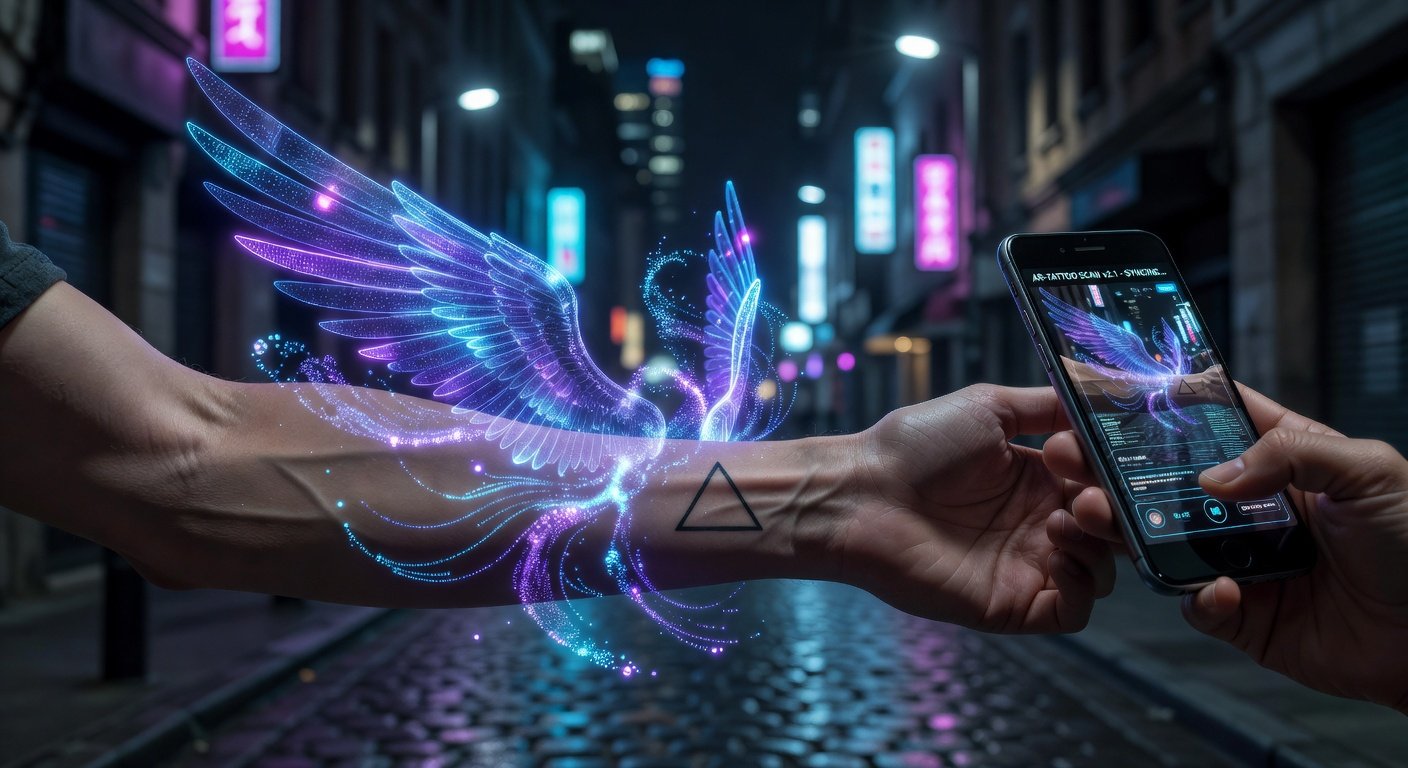
Augmented reality (AR) is reshaping the tattoo industry in profound ways, turning static ink into dynamic, interactive art. By 2026, AR-enhanced tattoos have become a mainstream fad, allowing wearers to scan their tattoos with a smartphone app to reveal overlaid digital animations, effects, and even interactive elements. Imagine a simple black line tattoo transforming into a swirling galaxy or a blooming flower under your phone's camera—this is the modern ink revolution.
These tattoos rely on precise, high-contrast designs that AR software can easily recognize. Popular apps use computer vision to detect the ink patterns and layer virtual graphics seamlessly. This fusion of permanent body art and temporary digital enhancements offers endless personalization without additional needles. As AR technology matures, powered by advancements in machine learning and mobile cameras, it's predicted to dominate tattoo trends, making traditional static tattoos feel outdated.
How AR Tattoos Work: The Tech Behind the Magic
At its core, AR tattoo technology uses marker-based augmented reality. The tattoo acts as a "marker"—a fixed, scannable image that triggers digital content. Here's a breakdown:
- Design Recognition: Tattoos feature bold lines, geometric shapes, or minimalist motifs optimized for AR detection. Apps like those built on Apple's ARKit analyze edges and contrasts in real-time.
- Digital Overlay: Once scanned, 3D animations, particles, or videos appear, anchored to the tattoo's position. For example, a geometric triangle might sprout holographic wings.
- Interactivity: Advanced apps allow user inputs—tilt your phone to rotate the animation or tap to change colors.
- Compatibility: Works on iOS and Android via ARCore from Google, ensuring broad accessibility by 2026.
This tech isn't new; it draws from QR code-like fiducials but evolves with AI for more organic recognition. Tattoos must be fresh or well-healed for optimal scanning, avoiding fades that blur markers.
Popular AR-Compatible Tattoo Styles in 2026
Not all tattoos suit AR enhancement. Styles with clean, high-contrast elements shine brightest. Here's what's trending:
- Minimalist Line Art: Thin, precise lines forming symbols like arrows, dots, or waves. These scan flawlessly, overlaying subtle animations like pulsing lights or trailing sparks.
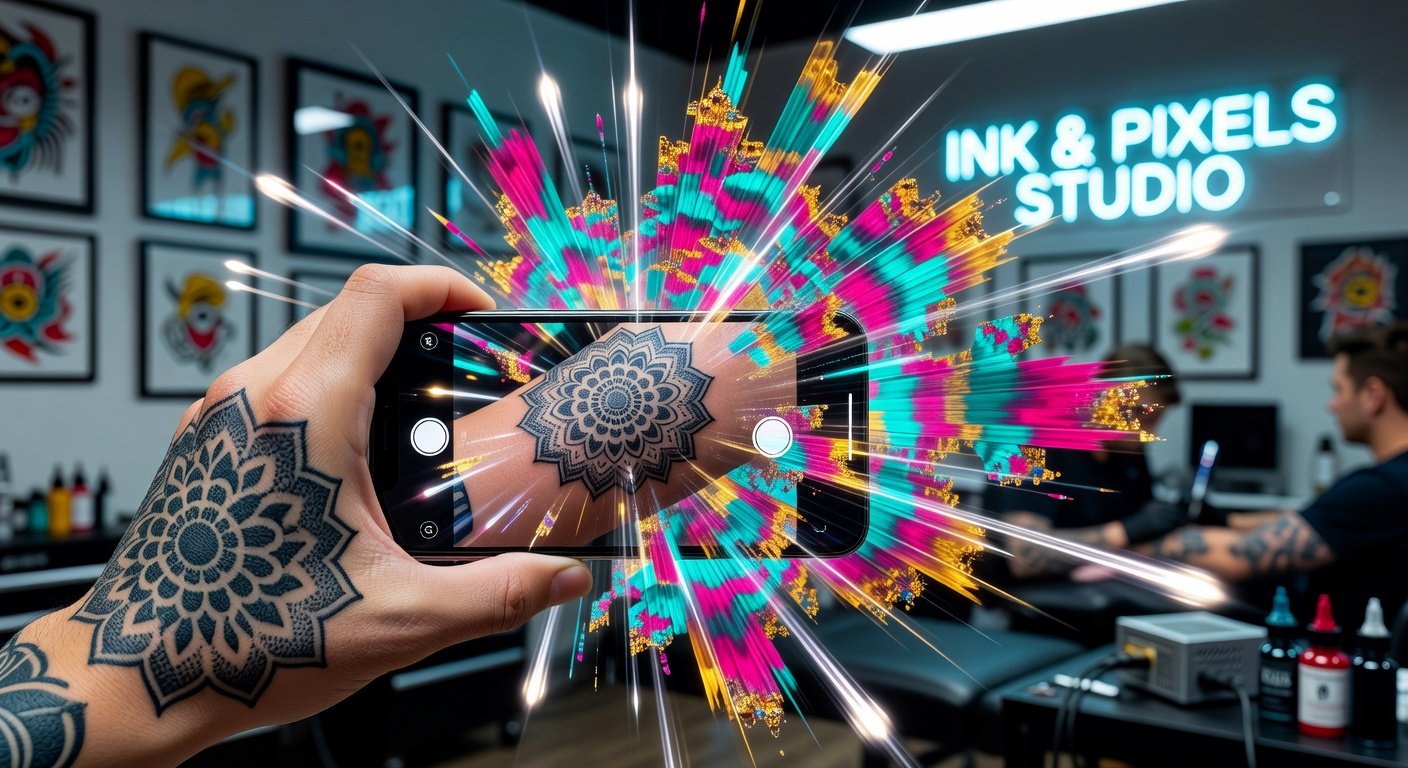
- Geometric Patterns: Triangles, hexagons, and mandalas provide perfect fiducials. A simple polygon can explode into fractal expansions or rotating polyhedrons.
- Abstract Blackwork: Solid black shapes with negative space. Ideal for dramatic effects like emerging shadows or liquid metal flows.
- Dotwork Mandalas: Intricate dots forming symmetrical designs that AR turns into hypnotic, breathing patterns.
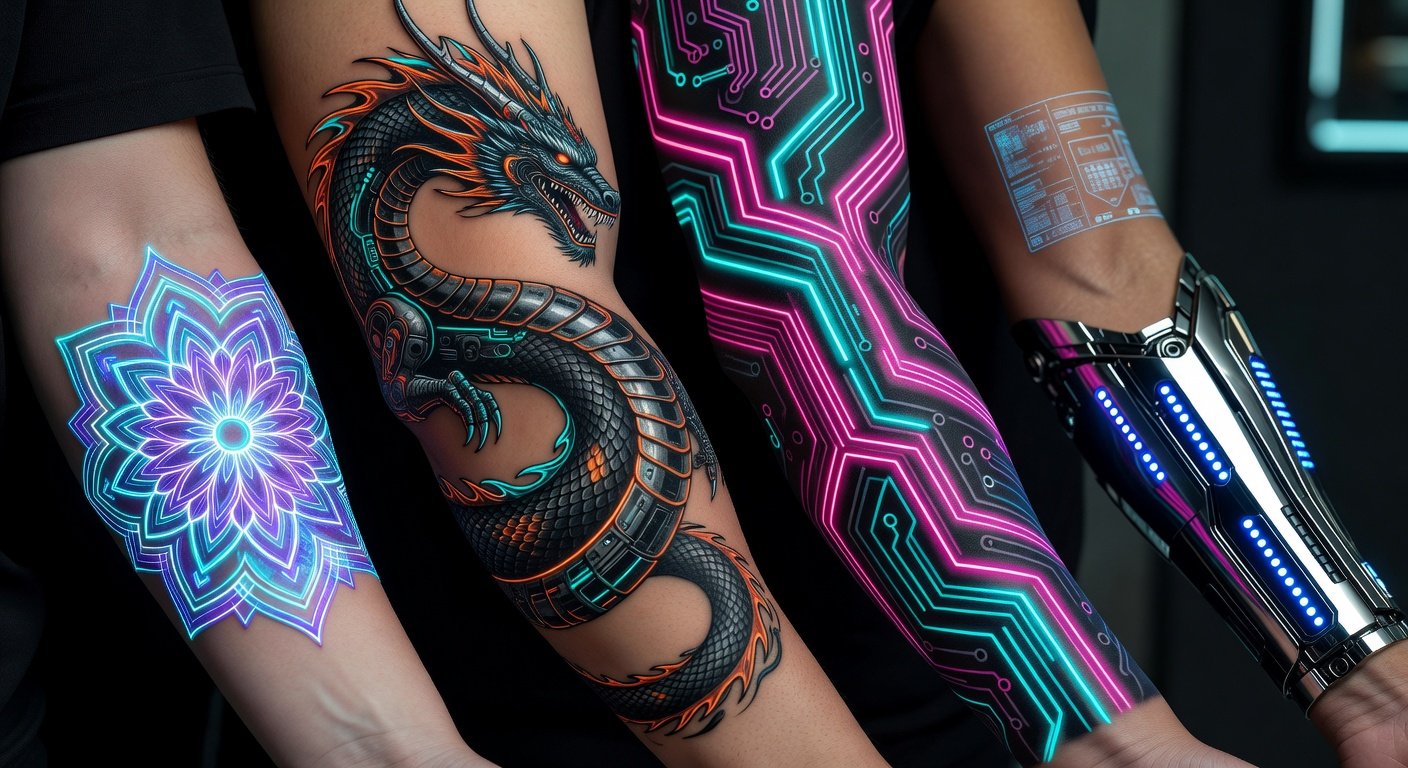
These styles prioritize scannability over color complexity, as vibrant hues can confuse algorithms. Tattoo artists now collaborate with AR developers to certify designs, ensuring compatibility with apps like InkAR or TattooVision.
Real-World Examples of AR Tattoos Gaining Traction
AR tattoos exploded in popularity post-2024, with influencers and celebrities leading the charge. One viral example is musician Billie Eilish's rumored geometric wrist tattoo, which scans to reveal a swirling music visualizer synced to her heartbeat via wearable integration.
In Europe, Berlin's tattoo studios offer "AR Story Tattoos," where minimalist portraits animate family histories—scanning a loved one's face to show home videos. A notable case is the "Dragon Sleeve" by artist Max Razdowkz, featured in tattoo expos: a black outline dragon that breathes digital fire, with flames reacting to phone motion.
Social media platforms like Instagram and TikTok amplify this trend. Hashtags like #ARTattoo2026 garner millions of views, showcasing user-generated content. Brands like Snapchat integrate AR lenses directly, linking to Snapchat's AR platform for custom filters tied to tattoos.
Even corporate adoption: Tech firms like Meta experiment with employee AR badges as tattoos, scanning to display holographic business cards.
Benefits of AR-Enhanced Tattoos for Personalization
Beyond aesthetics, AR tattoos offer practical perks:
- Versatility: Change the digital layer seasonally—Halloween horrors or romantic florals—without altering the ink.
- Storytelling: Embed personal narratives, like a milestone date animating into a life timeline.
- Accessibility: Include audio descriptions or translations for the visually impaired.
- Privacy: Animations visible only via app, keeping the base tattoo discreet.
- Healing and Longevity: Digital elements compensate for ink fading over decades.
Psychologically, they boost self-expression, blending permanence with fluidity in a fast-changing world.
Tips for Getting AR-Ready Modern Tattoos in 2026
Ready to ink up for the AR era? Follow these steps:
- Choose a Certified Artist: Seek studios specializing in AR designs, verified by apps. Check portfolios for scannable works.
- Test Designs: Use AR preview apps to simulate overlays before committing.
- Opt for Placement: Forearms, hands, or calves for easy scanning; avoid highly mobile areas like joints.
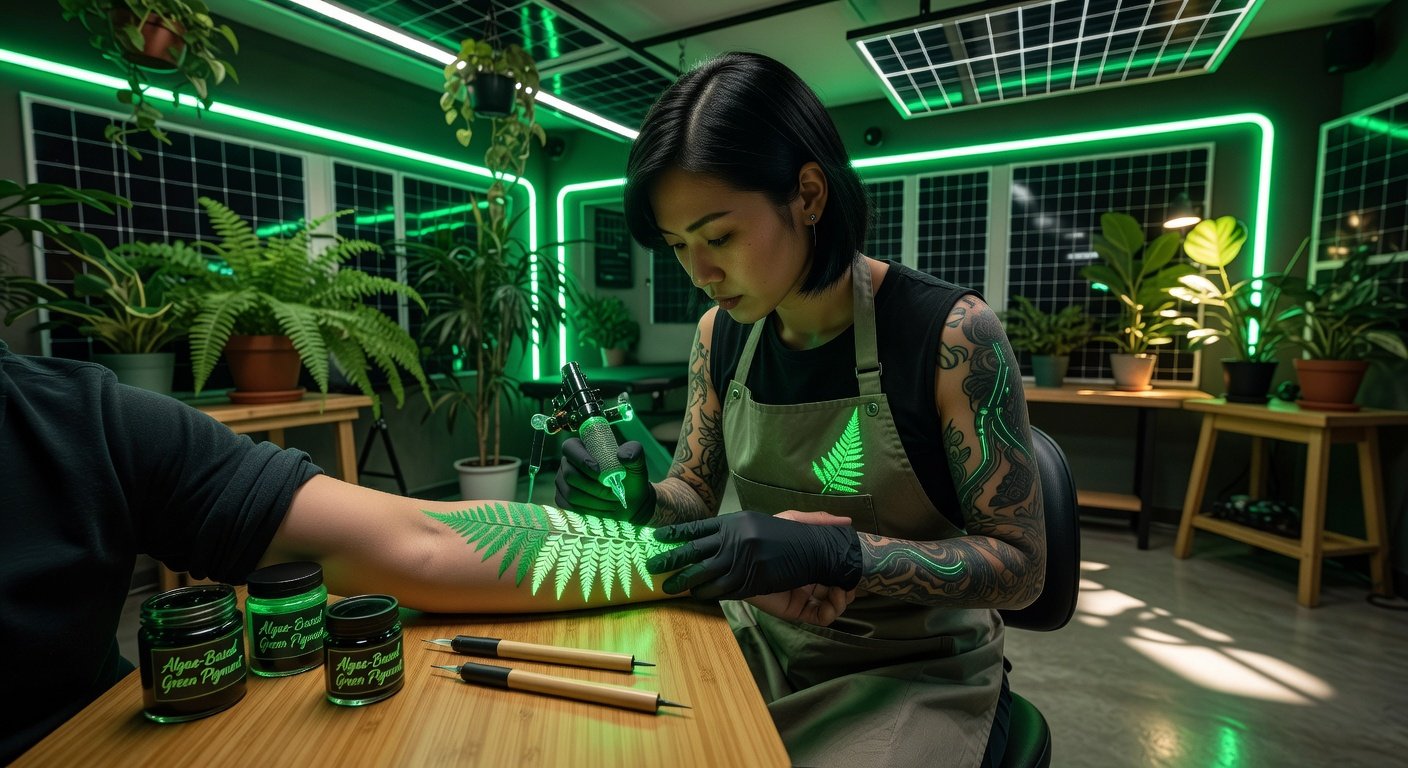
- Ink Quality: Black ink only for markers; use UV or glow inks for hybrid effects.
- App Selection: Download multiple—InkAR for basics, ProAR for pros. Ensure cross-platform support via Google ARCore.
- Aftercare: Protect from sun to preserve contrast; rescan monthly to calibrate.
Mistakes to Avoid: Overly detailed or colorful designs that won't scan; ignoring app updates that change recognition algorithms; forgetting battery life for live demos.
The Future: How AR Will Influence Tattoo Trends
By 2030, AR tattoos could integrate with wearables, projecting animations onto smart glasses. Haptic feedback might let you "feel" the digital effects. Expect AI-generated custom designs, where you describe a concept and get an AR-optimized tattoo blueprint.
Sustainability rises too: Digital layers reduce regret tattoos. Cultural shifts may see AR reviving traditional motifs dynamically, like Maori patterns animating ancestral stories.
Challenges remain—privacy concerns over scan data, accessibility for non-smartphone users—but innovations like edge computing will address them.
Conclusion: Ink Your Future with AR
AR-enhanced tattoos represent the pinnacle of modern ink in 2026: permanent yet infinitely adaptable. Whether minimalist lines or geometric wonders, they invite a new era of body art. Consult a specialist, scan the future, and join the revolution—your skin is the canvas, AR the brush.
No comments yet. Be the first!