 Inked Mythos
Introduction to AI Tattoos in 2026
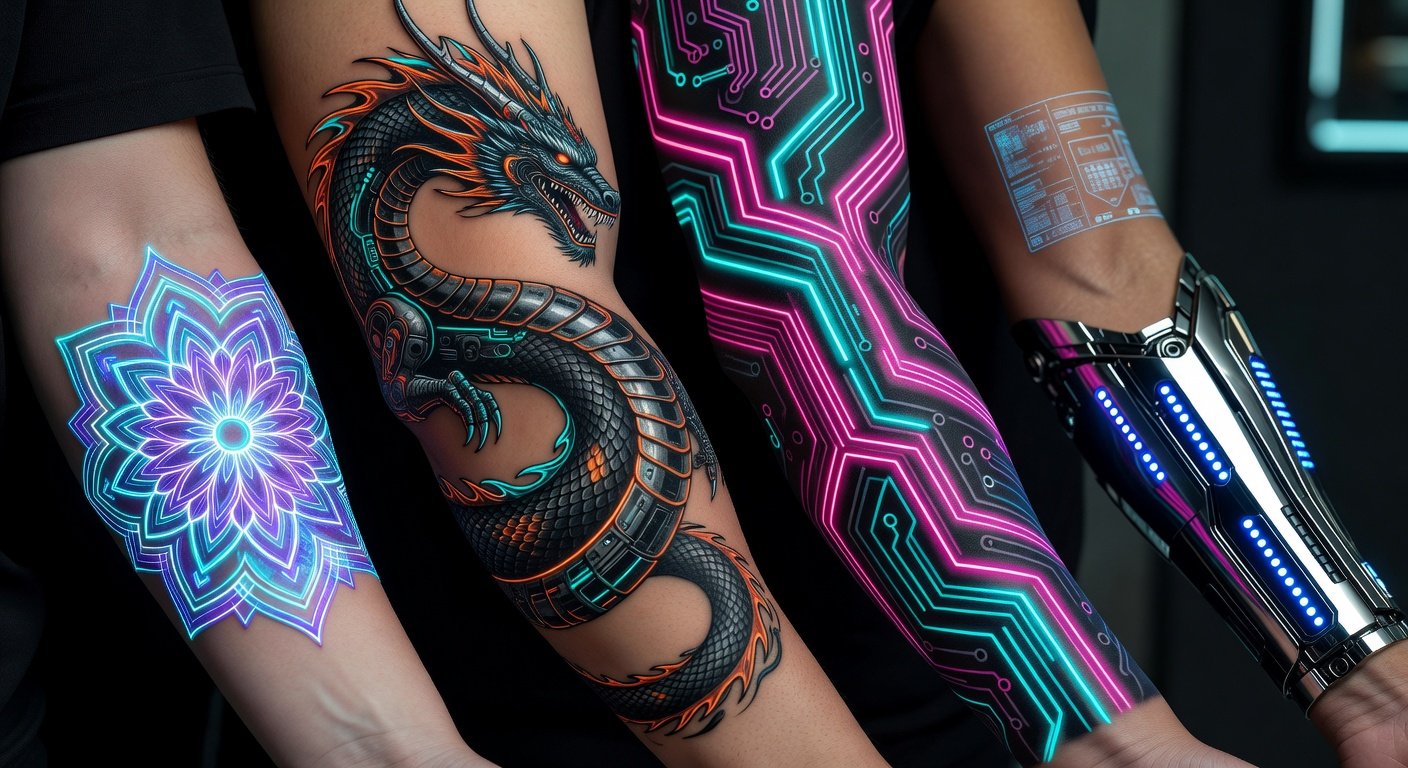
In 2026, the tattoo world is undergoing a digital revolution. AI tattoos—designs crafted by artificial intelligence tools—are captivating tech-savvy ink enthusiasts worldwide. What was once a niche experiment has exploded into a mainstream trend, offering hyper-personalized, surreal, and futuristic motifs that traditional methods can't match. From neural networks generating intricate patterns based on a single photo or phrase to evolving portraits that adapt to your style preferences, AI is redefining modern ink.
This surge aligns with broader advancements in generative AI, making custom art accessible to anyone with a smartphone. Whether you're dreaming of cyberpunk sleeves, biomechanical hybrids, or abstract neural landscapes, AI delivers endless creativity at lightning speed. But is this the future of tattoos, or just a passing fad? In this guide, we'll dive deep into how it works, practical steps to create your own, real-world examples, comparisons to hand-drawn art, and key considerations for ethical inking.
How AI Generates Tattoo Designs
AI tattoo generation relies on advanced machine learning models trained on vast datasets of artwork, photographs, and tattoo styles. Tools like diffusion models (think Stable Diffusion) or transformer-based generators analyze user inputs—text prompts, images, or even sketches—and output highly detailed designs optimized for skin.
Key technologies include:
- Text-to-Image Models: Input 'cyberpunk dragon with neon circuits on forearm' and get variations in seconds.
- Image-to-Image Refinement: Upload a base sketch; AI enhances it with shading, line work, and color palettes suited for tattoos.
- Style Transfer: Blend influences from artists like Alex Grey or traditional Japanese irezumi with futuristic twists.
Platforms powering this include open-source models on Stability AI and commercial tools like Midjourney. These systems use neural networks to predict pixel patterns, ensuring designs are scalable, symmetrical, and skin-friendly—avoiding overly fine details that blur over time.
Step-by-Step Guide: Creating Your AI Tattoo Design
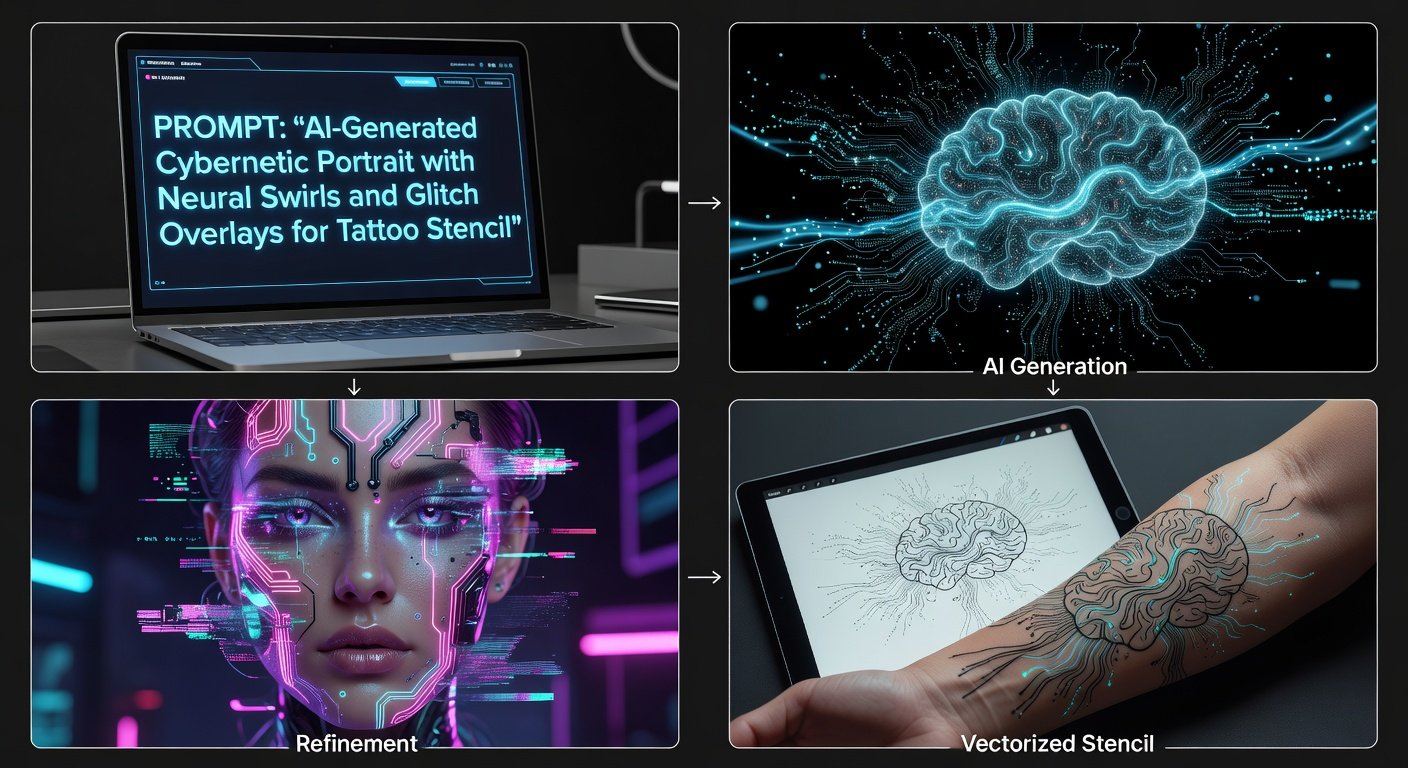
Ready to ink the future? Follow this comprehensive process to generate, refine, and finalize an AI tattoo design before committing to the needle.
- Define Your Vision: Brainstorm keywords. Combine themes (e.g., 'surreal forest with quantum fractals'), placement (forearm, ribcage), size (3x5 inches), and style (blackwork, color realism). Consider skin tone for contrast.
- Choose Your AI Tool: Free options like Stable Diffusion via web UIs or apps like NightCafe. Paid ones offer higher resolution. Start with a prompt: 'Minimalist AI circuit mandala, high contrast black ink, tattoo-ready, clean lines.'
- Generate Initial Designs: Run 10-20 variations. Use seeds for reproducibility and upscale to 1024x1024 pixels.
- Refine Iteratively: Employ inpainting to tweak elements—e.g., add glow effects or remove clutter. Test on a 3D skin simulator app for realism.
- Vectorize for Tattoo Machines: Convert raster output to SVG using tools like Adobe Illustrator or free Inkscape. Ensure bold outlines (0.5-1mm thick) for crisp inking.
- Consult a Tattoo Artist: Share files digitally. Many now specialize in AI-assisted work, adjusting for healing and aging.
- Prototype with Henna or Temp Ink: Wear a stencil for 1-2 weeks to confirm placement and vibe.
This workflow typically takes 1-3 hours, versus weeks for custom hand-draws.
Real-World Case Studies: Artists Embracing AI
Pioneering tattoo artists are leading the charge. Take Berlin's Studio CyberInk, where artist Lena Voss uses AI to co-create with clients. In one project, a client inputted family photos; AI evolved them into a surreal portrait sleeve blending realism with glitch art. The result? A viral Instagram hit with 500k views.
In Los Angeles, Jake 'Neo' Ramirez integrates DALL-E outputs into his neo-traditional style. A recent piece: an AI-generated phoenix rising from circuit boards, inked on a tech exec's calf. Clients report 30% faster sessions since designs arrive prepped.
Across the Pacific, Tokyo's AI Tattoo Lab collaborates with neural networks for ukiyo-e evolutions—floating worlds infused with holographic elements. These cases show AI as a collaborator, not a replacement, amplifying artist creativity.
For more on generative AI in art, explore resources from OpenAI.
AI Tattoos vs. Traditional Hand-Drawn Designs
Here's a head-to-head comparison:
| Aspect | AI Tattoos | Traditional |
|---|---|---|
| Customization | Infinite variations from prompts; hyper-personalized. | Limited by artist's style and time. |
| Speed | Minutes to hours. | Days to weeks for sketches. |
| Creativity | Surreal, impossible hybrids (e.g., quantum animals). | Rooted in human intuition and skill. |
| Cost | Lower upfront (free tools); artist fees similar. | Higher for custom commissions. |
| Uniqueness | Risk of similar outputs if prompts overlap. | One-of-a-kind artisan work. |
AI excels in ideation; humans shine in execution and emotional depth.
Pros and Cons of AI Tattoos
- Pros:
- Endless creativity: Generate thousands of ideas instantly.
- Accessibility: No drawing skills needed.
- Precision: Optimized for tattoo longevity.
- Trends: Perfect for 2026's glitchcore and biotech aesthetics.
- Cons:
- Over-saturation: Popular prompts lead to 'cookie-cutter' looks.
- Lack of soul: Some purists miss the human touch.
- Technical glitches: Occasional artifacts require fixes.
- Ethical debates: Training data IP concerns.
Balancing these makes AI a powerful ally.
Ethical Considerations and Collaborations
Ethical AI use is paramount. Ensure tools respect artist copyrights—opt for ethically trained models. Collaborate with pros: AI for concepts, artists for final inking. Fading fads? While trends evolve, personalized AI designs offer timeless appeal over viral memes.
Learn about tattoo history and safety via Wikipedia's Tattoo page.
FAQs on AI Tattoos
Q: Are AI tattoos permanent like traditional ones?
A: Yes, once inked by a professional using quality pigments.
Q: Can AI designs fade differently?
A: No, if vectorized properly with bold lines; artist expertise matters.
Q: Best free AI tools for beginners?
A: Hugging Face demos or Craiyon for quick starts.
Q: How to avoid generic designs?
A: Layer unique personal elements like pet photos or handwriting.
Conclusion: Ink the Future Today
AI tattoos in 2026 aren't just ink—they're a fusion of human imagination and machine ingenuity. From generating your dream design to collaborating with visionary artists, this trend empowers bolder self-expression. Dive in, experiment responsibly, and join the modern ink revolution. Your skin canvas awaits its digital upgrade.
No comments yet. Be the first!