 Inked Mythos

Introduction to Advanced Tattoo Cover-Ups in 2026 Ink Culture
The tattoo industry continues evolving rapidly in 2026, with cover-up artistry emerging as a sophisticated skill set within ink culture communities. Artists and enthusiasts now seek methods to refresh outdated ink without complete removal, blending technical precision with creative vision. This comprehensive guide explores practical solutions drawn from body art forums, recent tattoo conventions, and professional workshops. Whether you are a seasoned tattoo artist looking to expand your expertise or an enthusiast planning a personal refresh, understanding these advanced techniques can transform challenging old tattoos into stunning new expressions. Cover-ups demand not only artistic talent but also deep knowledge of skin biology, ink chemistry, and healing dynamics.
Understanding Pigment Analysis for Effective Cover-Ups
Successful cover-ups begin with thorough pigment analysis. Professionals examine ink density, color saturation, and skin undertones using specialized tools like dermoscopes and digital imaging software. In 2026, advanced spectroscopy devices help identify metallic versus organic pigments, reducing risks of adverse reactions during layering. Artists often map old tattoo areas section by section to determine opacity levels before selecting new ink formulations. For instance, black inks from the early 2000s frequently contain high carbon concentrations that resist simple over-inking, requiring targeted lightening first. Skin type assessment using Fitzpatrick scales ensures new pigments will integrate evenly, preventing patchy results. Real-world examples from forums show clients with mixed ink ages benefiting from pre-treatment swabs that reveal hidden fluorescence under UV light, guiding safer layering choices.
Comparing Laser Preparation Methods
Laser treatments serve as a common preparatory step for cover-ups. Q-switched lasers remain popular for breaking down dense black inks, while picosecond lasers offer faster clearance for colored pigments with fewer sessions. Comparisons from recent events show that combining fractional lasers with topical agents can lighten tattoos by up to 70% in targeted zones, creating better canvases for new designs. Pico lasers excel at shattering smaller ink particles with minimal thermal damage, making them ideal for sensitive areas like wrists or necks. In contrast, nanosecond lasers provide deeper penetration for older, settled tattoos but may require more downtime. Always consult certified technicians to match laser type to your ink profile, and factor in skin recovery periods of at least four weeks between sessions to avoid scarring that could complicate subsequent cover-up work.
Design Layering Strategies
Layering new designs over old ones requires strategic planning. Start with bold outlines to mask underlying shapes, then build depth with shading and negative space. Popular approaches include geometric overlays or nature motifs that incorporate existing lines. Color theory plays a central role—pairing cool tones over warm remnants achieves seamless transitions while avoiding muddy results. Artists increasingly use stippling and dotwork techniques to gradually build coverage without overloading the skin. Case studies from 2026 tattoo expos demonstrate how planning the new design around the old tattoo's negative spaces reduces the number of required sessions. Practice on synthetic skins helps refine these techniques before live application, allowing artists to test ink flow and pressure variations.
Real-World Case Studies from Tattoo Events
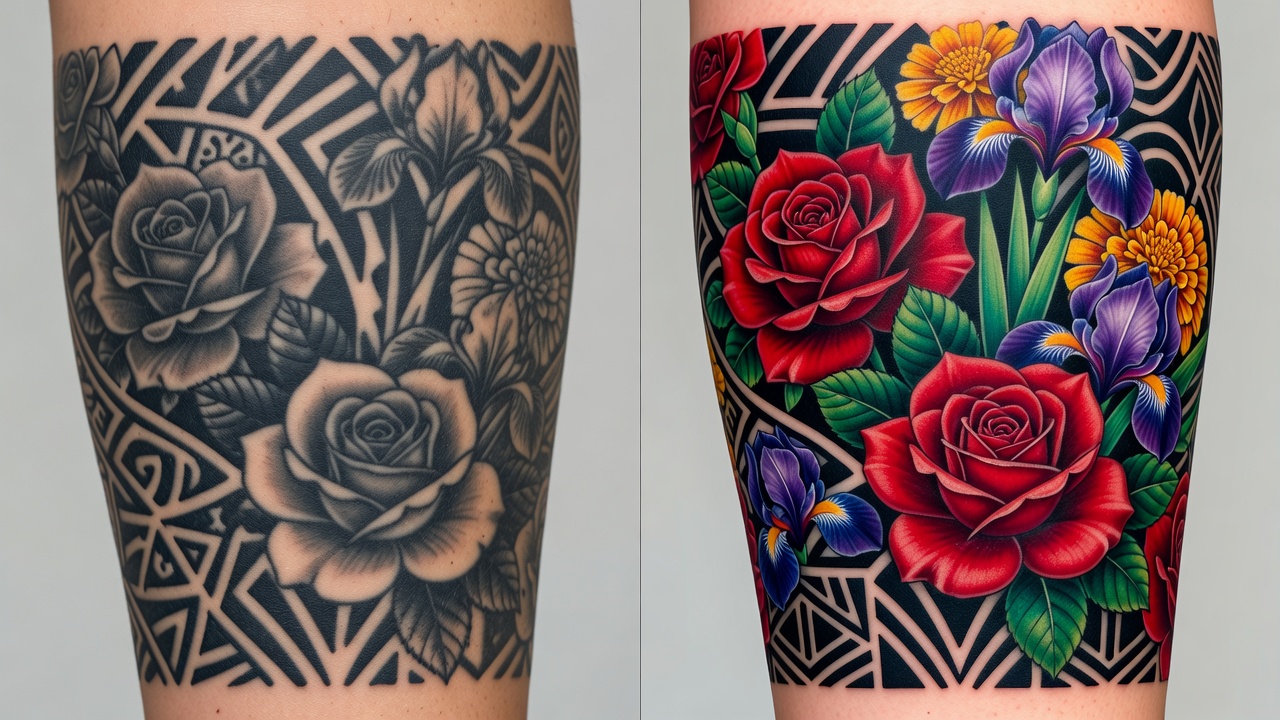
At major 2026 ink gatherings, artists shared transformative cover-up stories. One participant converted a faded tribal band into a detailed biomechanical sleeve using multi-session layering over six months, resulting in a fully integrated piece that looked like original work. Another transformed a small script tattoo into an expansive floral piece by analyzing pigment migration patterns and using selective laser fading on only the darkest areas. A third case involved a large back piece where old color saturation was addressed through hybrid methods: initial laser sessions followed by strategic blackwork to create a new mandala pattern. These examples highlight success rates above 85% when following structured prep protocols, inspiring enthusiasts in online forums to pursue similar skill-building paths. Documenting each stage with high-resolution photos helps both clients and artists track progress and adjust designs mid-process.
Step-by-Step Application Guides
Follow this structured process for reliable results: 1. Conduct initial consultation and pigment mapping using dermoscopy and client history review. 2. Perform any necessary laser prep with follow-up healing periods of four to six weeks. 3. Sketch and stencil the new design directly over the old tattoo, incorporating existing lines where possible. 4. Apply base layers with high-opacity inks in thin passes to minimize trauma. 5. Add details, highlights, and color gradients in subsequent sessions spaced four to six weeks apart, monitoring skin response at each stage. 6. Provide customized aftercare instructions including gentle cleansing and moisturizing routines. Document each phase with photos for client records and portfolio growth, enabling future reference for similar projects.
Recommended Tools and Materials
Invest in quality equipment such as rotary machines with adjustable needle depths, vegan ink sets optimized for layering, and aftercare products containing hyaluronic acid. Wireless devices offer precision during extended sessions, while sterilization standards aligned with health guidelines from sources like the FDA ensure client safety. Additional recommendations include magnification lamps for detailed pigment analysis, synthetic practice skins for technique refinement, and digital design software for pre-visualizing layered outcomes. Many professionals also rely on specialized numbing gels and barrier creams to maintain client comfort throughout longer appointments.
Common Mistakes to Avoid
- Rushing the pigment analysis phase, which can lead to incompatible ink choices and visible ghosting of the old design.
- Skipping adequate laser preparation on dense black areas, resulting in poor coverage and multiple corrective sessions.
- Overloading the skin with too many layers in one sitting, increasing risks of scarring and prolonged healing.
- Ignoring skin undertones when selecting new colors, causing the cover-up to appear uneven under different lighting conditions.
- Failing to communicate realistic timelines and aftercare expectations to clients, leading to dissatisfaction.
Before-and-After Insights and Success Rates
Visual documentation remains essential. Before-and-after comparisons reveal how strategic color blocking and texture integration elevate outcomes. Data from recent conventions indicate that well-planned cover-ups achieve client satisfaction rates exceeding 90%, particularly when pain management protocols and healing timelines are clearly communicated upfront. Success often depends on realistic expectations set during consultations, with artists emphasizing that multiple sessions may be necessary for complex pieces.
FAQs on Pain Management and Healing Timelines
- How is pain managed during cover-ups? Topical numbing creams applied 45 minutes prior, combined with breaks and breathing techniques, help most clients tolerate sessions comfortably. Some artists incorporate cooling devices for additional relief.
- What are typical healing timelines? Initial healing spans 2-3 weeks, with full settling of layered ink occurring around 6-8 weeks. Follow aftercare instructions from resources such as the CDC to minimize complications like infection.
- Can all tattoos be covered effectively? Most can with proper analysis, though heavily saturated or multi-layered old work may require hybrid laser-plus-cover approaches for optimal results.
- How many sessions are usually needed? Expect two to four sessions depending on the size, density, and complexity of the original tattoo and desired new design.
- What factors affect healing speed? Age, skin type, lifestyle, and adherence to aftercare all influence recovery; healthy individuals with good circulation typically heal faster.
Conclusion
Mastering tattoo cover-ups empowers both artists and clients within today's dynamic ink culture. By focusing on analysis, preparation, creative layering, and ongoing education through events and forums, individuals can achieve refreshed personal expressions without full removal. These advanced techniques continue to evolve, offering new possibilities for transforming old ink into meaningful modern art. Continuous learning ensures these methods stay accessible and effective in 2026 and beyond, fostering a more skilled and satisfied community.
No comments yet. Be the first!