 Inked Mythos
Introduction to Blackwork Realism and Irezumi Across Skin Tones
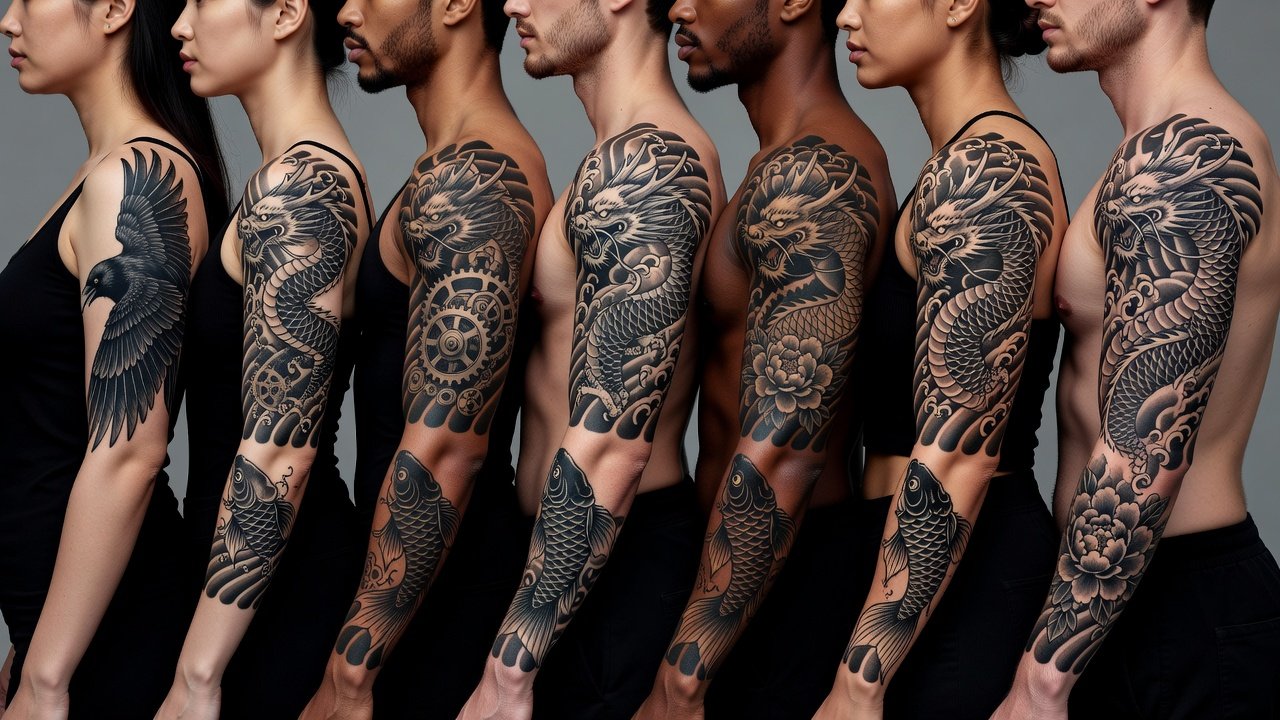
Blackwork realism and irezumi represent powerful tattoo styles that blend bold linework with intricate shading. Blackwork emphasizes dense black ink patterns, realism captures lifelike details through precise gradients and textures, and irezumi draws from traditional Japanese motifs such as dragons, koi fish, and cherry blossoms. These styles demand careful consideration of skin tone because melanin levels directly influence ink absorption, visual contrast, and long-term healing outcomes. Light skin often reveals fine details effortlessly, while darker skin requires strategic ink layering to maintain definition. This comprehensive guide examines the nuances for light, medium, and dark skin tones, providing actionable steps for consultations, design adjustments, placement decisions, and aftercare routines that promote optimal results and longevity.
Understanding Skin Tone Categories and Ink Interaction
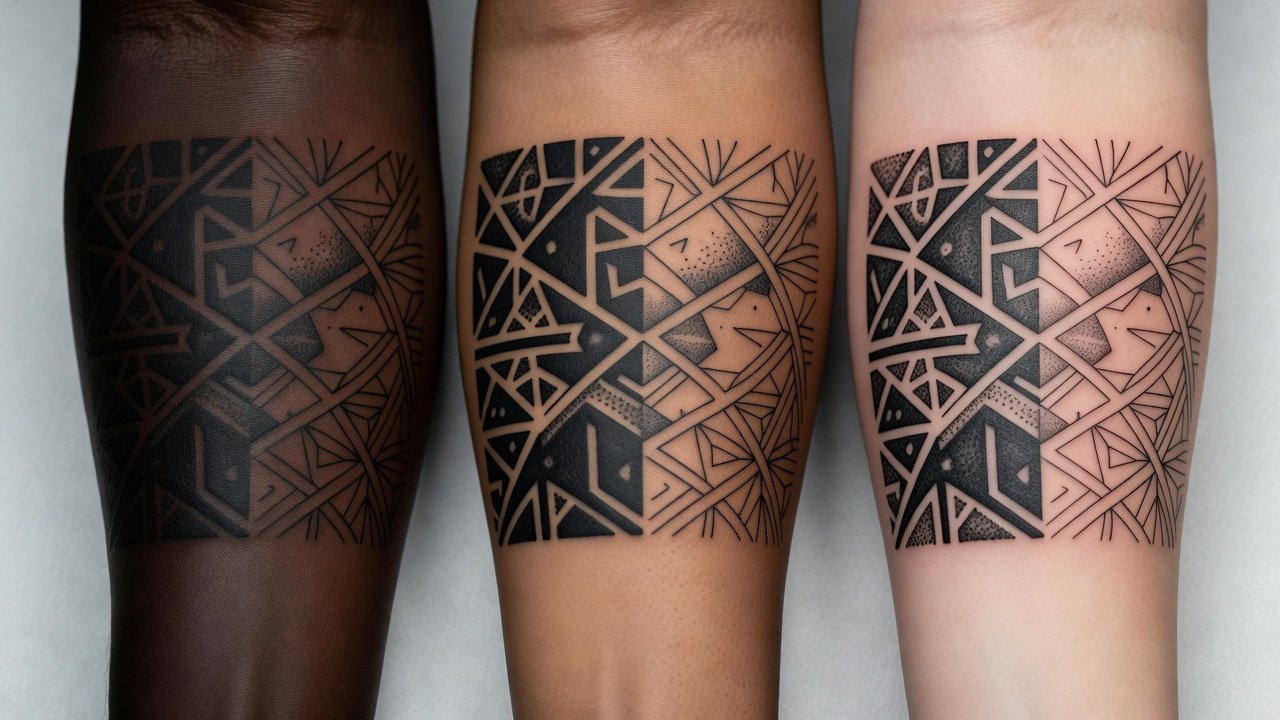
Skin tones are commonly categorized using the Fitzpatrick scale, ranging from I-II for very light skin that burns easily to V-VI for dark skin that rarely burns. Light skin (Fitzpatrick I-II) features low melanin, allowing black ink to create sharp, high-contrast images ideal for realism portraits and delicate blackwork patterns. Medium skin (III-IV) contains moderate melanin that can soften edges but supports rich saturation in irezumi waves and floral elements when artists use varied needle depths. Dark skin (V-VI) has higher melanin content, which can obscure lighter shading and necessitate bolder outlines plus deeper saturation to prevent designs from appearing washed out over time. Ink interaction varies because melanin competes with pigment particles; on darker tones, artists often select higher-density black inks formulated for better opacity. Examples include a realistic wolf portrait on light skin showcasing individual fur strands, contrasted with the same design on medium skin requiring enhanced mid-tones for depth, and on dark skin demanding solid black fills with negative space highlights to retain form.
Comparing Ink Saturation, Contrast, and Longevity
Saturation refers to how deeply ink settles into the dermis, while contrast determines visibility against the skin's natural color. On light skin, blackwork achieves maximum saturation with minimal passes, producing crisp lines that retain sharpness for decades. Realism benefits from subtle gray washes that mimic skin undertones, and irezumi motifs maintain flowing elegance without muddiness. Medium skin requires balanced saturation techniques, such as layering multiple passes for blackwork backgrounds while preserving contrast in realism highlights through selective wiping during application. Longevity on medium tones averages 8-12 years before minor fading appears in sun-exposed areas. Dark skin demands the highest saturation levels, often using magnum needles for solid fills in blackwork and irezumi to combat melanin interference. Contrast is achieved by incorporating thicker outlines and strategic highlights. Longevity improves with consistent aftercare, though dark skin may show slight ink migration if not monitored. Side-by-side comparisons reveal that a blackwork sleeve on light skin heals with vivid edges in four weeks, while the same on dark skin needs six weeks and occasional touch-ups for uniform density.
Pre-Tattoo Consultations and Artist Selection
A thorough consultation sets the foundation for success. Clients should prepare by identifying their Fitzpatrick type and sharing photos of healed tattoos on similar skin. Artists experienced in diverse tones will demonstrate portfolios featuring blackwork on light forearms, realism faces on medium chests, and irezumi dragons on dark thighs. Key questions include ink brand selections tested across tones, sterilization protocols, and expected healing variations. Review references from multiple clients and confirm the artist understands cultural elements in irezumi to avoid misappropriation. Cross-reference safety practices with resources from CDC guidelines on infection control. Selecting the right professional reduces risks of poor contrast or uneven healing by 70 percent according to client surveys.
Placement Adjustments by Skin Tone
Strategic placement maximizes visual impact and minimizes complications. Light skin tolerates high-movement areas like wrists for fine realism details because healing occurs rapidly. Medium skin suits stable zones such as the upper back for expansive irezumi pieces that allow ink to settle without stretching distortion. Dark skin performs best on thicker dermal areas like the calves or shoulders where bold blackwork maintains saturation despite friction. Adjustments include scaling up line weights by 20 percent on darker tones and adding extra negative space in dense blackwork to prevent blending. For irezumi, follow body contours more loosely on medium skin to accommodate natural curvature during healing.
Aftercare Tailored to Skin Type
Aftercare protocols must adapt to skin response. All tones benefit from gentle cleansing twice daily with fragrance-free soap and application of tattoo-specific balms. Light skin heals in 10-14 days but requires immediate broad-spectrum sunscreen to protect fine lines. Medium skin may experience mild itching around day five, managed with cool compresses. Dark skin needs vigilant monitoring for hyperpigmentation, using products with vitamin E for four to six weeks while avoiding tight clothing. General healing spans 4-8 weeks, with touch-up sessions scheduled at three months if saturation appears inconsistent. Follow artist instructions precisely and track progress weekly.
Avoiding Common Pitfalls
Common errors include ignoring tone-specific contrast, leading to invisible shading in realism on dark skin, or over-saturating blackwork on light skin causing blowouts. Uneven healing often results from inconsistent moisturizing or sun exposure. Examples of pitfalls: a client with medium skin placing an irezumi piece on the ankle experiences faster fading due to constant movement; another with dark skin skips sunscreen and develops patchy visibility. Mitigate by choosing artists who provide tone-adjusted mockups and committing to full aftercare regimens.
Decision Checklist for Clients
- Determine your exact skin tone category and document sun exposure habits.
- Compile a list of three artists with verified experience on your tone range.
- Request detailed design adaptations including line weight and shading adjustments.
- Evaluate placement options against lifestyle factors like clothing and activity levels.
- Prepare a personalized aftercare kit with approved products.
- Schedule a three-month follow-up appointment in advance.
- Review all safety certifications and client testimonials thoroughly.
FAQs on Fading and Artist Choice
How long before blackwork fades noticeably on dark skin? Quality applications with proper saturation maintain strong visibility for 10-15 years, though annual sunscreen use is essential to slow any gradual lightening.
Should I choose an artist based solely on skin tone expertise? Expertise across tones is vital but should combine with style mastery; verify credentials through portfolios and health authority references such as those from FDA tattoo safety pages.
Can irezumi designs work effectively on all skin tones? Absolutely, provided artists adjust contrast and saturation appropriately during the planning phase.
What signs indicate a need for early touch-ups? Watch for blurred edges or reduced opacity within the first six months and consult your artist promptly.
How does skin type affect pain levels during the session? Darker tones often report slightly higher sensitivity due to denser nerve endings, but numbing options can be discussed.
Conclusion
Successfully matching blackwork realism and irezumi tattoos to individual skin tones ensures designs remain striking and culturally authentic for years. Through detailed consultations, thoughtful placement, customized aftercare, and avoidance of common mistakes, clients achieve professional outcomes that honor both the art and their bodies. Always partner with skilled artists and prioritize health resources from organizations like American Academy of Dermatology for ongoing skin wellness. This approach transforms body art into a lasting personal statement.
No comments yet. Be the first!