 Inked Mythos
Introduction to Watercolor Tattoos in 2026
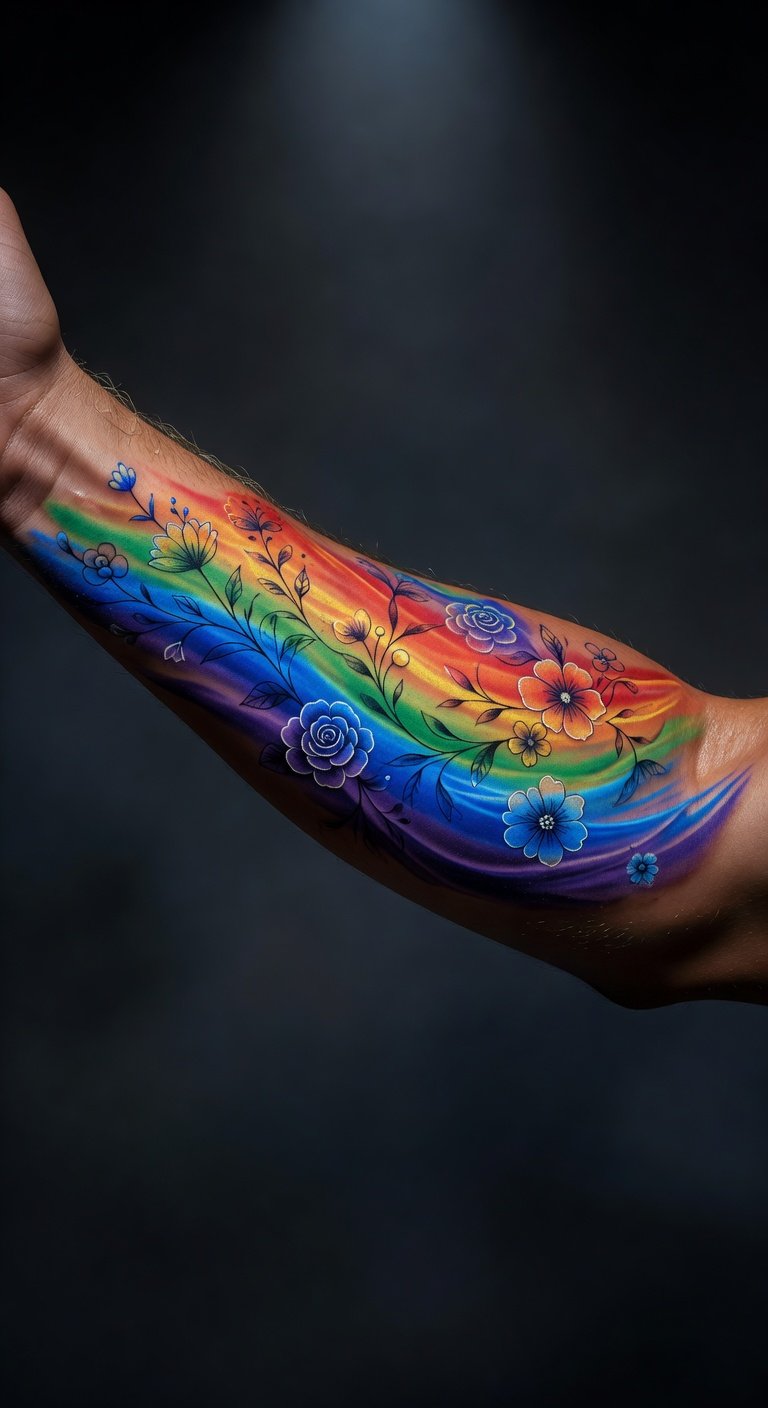
Watercolor tattoos have evolved from niche artistry to a dominant force in the tattoo industry, mimicking the fluidity and vibrancy of traditional watercolor paintings on skin. By 2026, this style is pushing boundaries with hyper-realistic blending, dynamic brushstroke simulations, and innovative UV-reactive pigments that glow under blacklight. For ink artists seeking to elevate their portfolios, mastering these advanced techniques is essential in a competitive market where clients demand gallery-worthy, long-lasting pieces.
This guide dives deep into the cutting-edge methods favored by top tattoo creators. We'll explore seamless color transitions, authentic brushstroke effects, specialized tools like precision needles and design software, and real-world case studies addressing common challenges like pigment fading. Whether you're a seasoned artist or honing your skills, these insights will help you create tattoos that captivate and endure.
The Evolution of Watercolor Tattoos into 2026
Watercolor tattoos burst onto the scene in the early 2010s, inspired by artists like Sasha Unisex and Amanda Wachob. Fast-forward to 2026, and the style has matured with technological integrations. Key trends include hyper-saturated hues that resist fading, abstract compositions blending realism with impressionism, and interactive elements like UV reactivity for nightlife appeal.
Innovators are drawing from digital art tools, incorporating gradients that shift under different lighting. According to industry reports, watercolor pieces now account for 25% of custom tattoos, driven by social media virality on platforms like Instagram and TikTok. The focus has shifted to durability—clients want art that looks fresh years later.
Mastering Seamless Color Blending Techniques
Seamless blending is the cornerstone of advanced watercolor tattoos, creating gradients that flow like water on canvas. Unlike traditional tattoos with bold outlines, watercolor relies on soft edges and layered opacity.
Key Techniques:
- Wet-on-Wet Application: Mimic watercolor by packing lighter colors first, then feathering darker shades while ink is fresh. Use a 5RL needle for initial layers, switching to magnums for blending.
- Gradient Mapping: Pre-plan with shading wheels. Start with primaries (cyan, magenta, yellow) and layer neutrals for depth. Pro tip: Dilute inks 20-30% with distilled water for smoother transitions.
- Airbrush Simulation: Employ round liner needles (RL) at low voltage (6-7V) for mist-like effects, building opacity gradually.
Achieving photorealistic blends requires practice on synthetic skin. Test fades by exposing practice pieces to UV light for 100 hours.
Capturing Authentic Brushstroke Effects
Brushstroke effects add texture and movement, elevating flat designs to dynamic masterpieces. In 2026, artists simulate sable, fan, and script brushes using needle configurations and stippling.
- Needle Selection: 7M or 9M magnums for broad strokes; 3RL for fine lines. Whip the machine lightly for tapered ends.
- Texture Layering: Stipple with a 25M for splatter effects, then soften with packing. Vary pressure for organic variance.
- Motion Simulation: Rotate the skin or machine for curved strokes, emulating drag lines.
Advanced artists use voltage ramps—starting at 8V and dropping to 6V—for fading trails that mimic drying pigment.
Innovative UV-Reactive Pigments for 2026
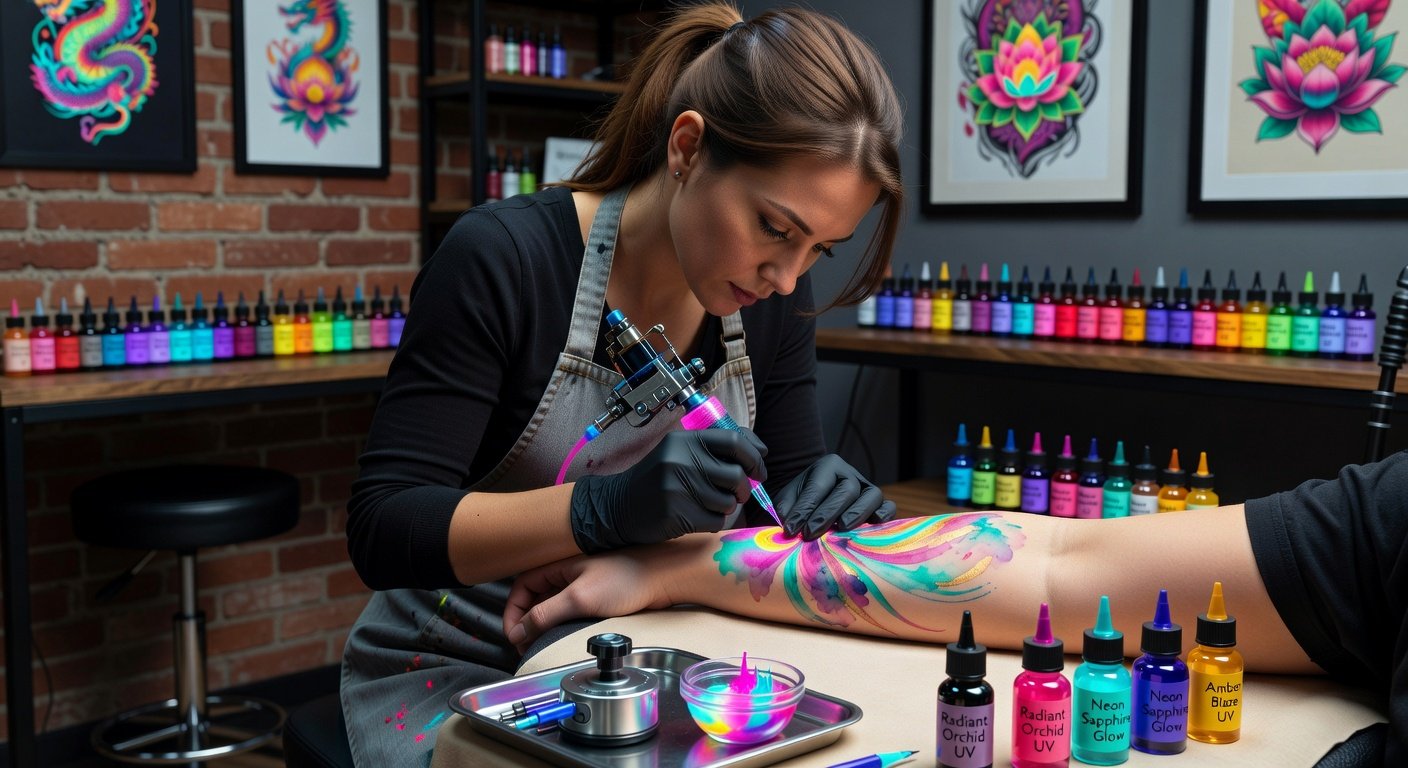
UV-reactive pigments are the game-changer for 2026 watercolor tattoos, fluorescing under blacklight for dual-day/night art. Brands like Ultraviolet Ink and Glowtec offer vegan, FDA-compliant options that integrate seamlessly with standard palettes.
For more on pigment safety, check the FDA cosmetics page. These pigments excite under 365nm wavelengths, perfect for festival-goers or performers.
Integration Tips:
- Layer UV inks beneath opaques to prevent washout.
- Test reactivity pre-tattoo with a blacklight booth.
- Combine with phosphorescent additives for afterglow.
Essential Tools for Precision Watercolor Work
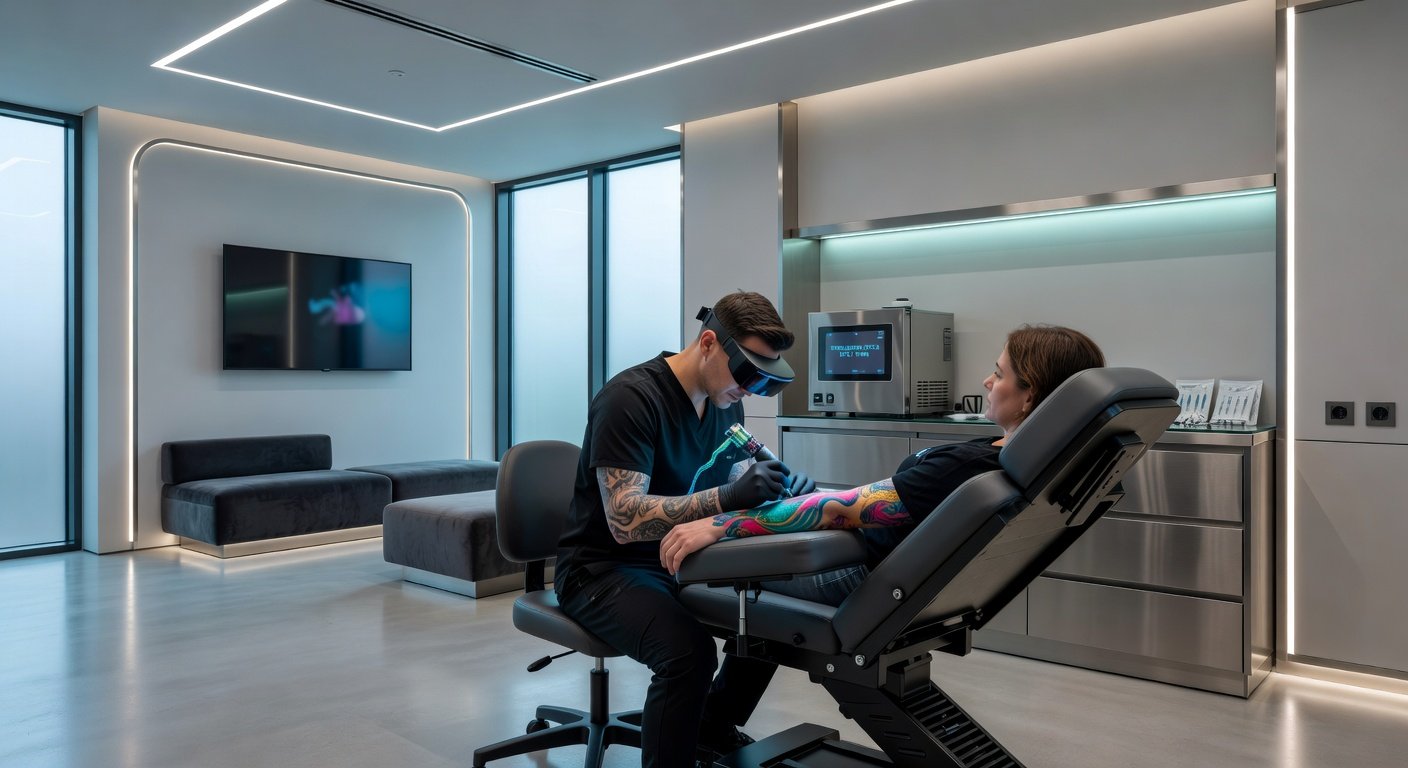
Modern tools bridge traditional tattooing with digital precision.
Hardware:
- Specialized Needles: Bugpin magnums (0.25mm) for ultra-fine blending; textured needles for stroke grip.
- Machines: Rotary pens like Bishop or Critical with adjustable stroke lengths (3.5mm for soft work).
- Ink Dilution Systems: Precision droppers for consistent ratios.
Software: Adobe Photoshop for previews—use liquify tools for skin stretch simulations. Free alternatives like GIMP work too. Explore Adobe Photoshop for layer-based watercolor brushes.
Wireless power supplies with app control allow real-time voltage tweaks mid-session.
Case Studies: Overcoming Fading in Watercolor Tattoos
Fading plagues watercolor due to diluted inks and skin turnover. Let's examine two pros who cracked it.
Case Study 1: Maria Lopez, LA Artist
Lopez faced client complaints on floral sleeves fading 40% in year one. Solution: Switched to nanotech pigments with silica encapsulation. Post-treatment protocol: Nano-collagen creams applied daily. Result: 90% retention after 18 months, showcased in her portfolio at tattoo expos.
Case Study 2: Kai Chen, Berlin Innovator
Chen tackled UV pieces washing out. He pioneered a base layer of stabilizing primer ink, followed by reactive tops. Using design software for UV previews, his commissions now feature in Healthline tattoo guides. Fading reduced to 15% over two years.
Common mistakes: Over-dilution, skipping aftercare education, poor placement (avoid sun-exposed areas).
Pro Tips for Gallery-Worthy Watercolor Pieces
To stand out:
- Customize stencils with thermal printers for exact previews.
- Incorporate client skin tone analysis—use Fitzpatrick scale for pigment matching.
- Build portfolios with time-lapse videos showing process.
- Avoid overcrowding; negative space enhances flow.
- Offer touch-up guarantees to build trust.
Practice on 3D arm models for realism. Network at conventions like Vegas Tattoo Expo.
Conclusion: Elevate Your Art in 2026
2026 watercolor tattoos demand mastery of blending, strokes, UV innovation, and anti-fade strategies. With the right tools and techniques—from precision needles to software previews—you'll craft pieces that mesmerize clients and peers alike. Dive in, experiment boldly, and watch your portfolio soar. The canvas of skin awaits your brush.
No comments yet. Be the first!