 Inked Mythos

Introduction to Therapeutic Tattoos in 2026
In 2026, tattoos have evolved far beyond mere aesthetics or rebellion. They have become powerful tools for mental health recovery, etched into the skin as permanent reminders of battles won against anxiety, depression, and trauma. As society embraces holistic healing, 'Mental Health Ink'—tattoos designed specifically for emotional catharsis—has surged in popularity. These designs symbolize personal triumphs, serving as daily affirmations of resilience.
According to the World Health Organization, mental health challenges affect one in eight people globally, making accessible therapies like therapeutic tattooing more vital than ever. This article dives into six real-life stories from 2026, showcasing before-and-after journeys, collaborations with visionary artists, and long-term emotional impacts. We'll also provide practical advice for those considering their own ink as part of recovery.
Why Tattoos Aid Mental Health Recovery
Tattoos trigger psychological processes that foster healing. The act of getting inked releases endorphins, reducing stress similar to exercise or meditation. Designs chosen thoughtfully act as 'externalized anchors,' grounding individuals during triggers. Research from the American Psychological Association highlights how symbolic art therapy enhances self-efficacy and narrative reconstruction—rewriting one's trauma story.
In 2026, advancements like hypoallergenic bio-inks and UV-reactive pigments allow for dynamic tattoos that 'glow' under blacklight, symbolizing inner light emerging from darkness. Collaborations between therapists and tattoo artists ensure designs align with cognitive behavioral principles, making tattoos a bridge between body and mind.
Case Study 1: Sarah's Semicolon Phoenix
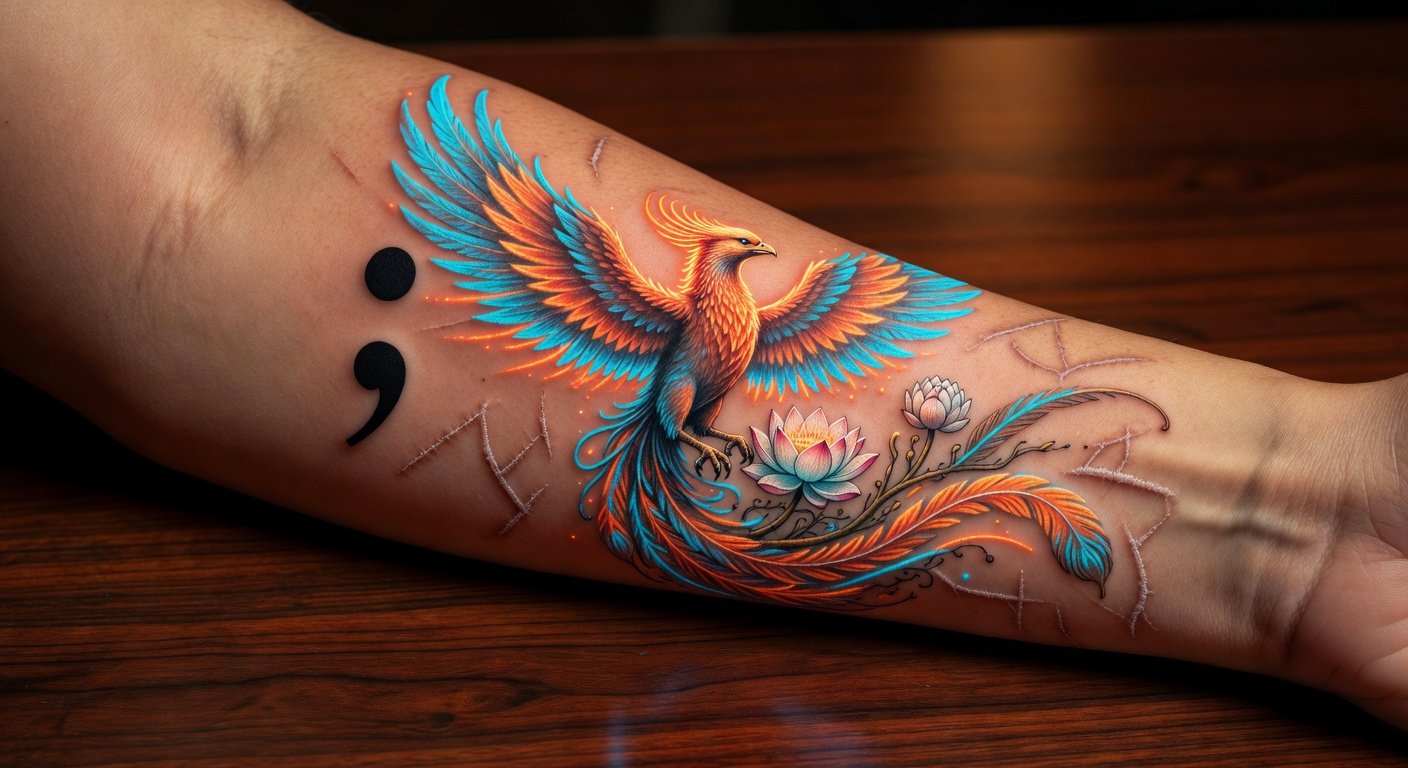
Sarah, a 32-year-old graphic designer from Seattle, battled severe anxiety post-2024 pandemic lockdowns. 'Before' her tattoo in January 2026, panic attacks left her housebound, her arms crossed defensively. Collaborating with artist Mia Reyes of InkHeal Studio, Sarah chose a semicolon (suicide prevention symbol) morphing into a phoenix rising from ashes on her forearm.
The two-hour session was therapeutic; Mia incorporated mindfulness pauses. 'After,' Sarah reports 70% fewer attacks. The tattoo, glowing purple under UV, reminds her: 'My story isn't over; it's transforming.' One year later, she's thriving in therapy and freelance work, the ink a badge of survival.
Case Study 2: Jamal's Wave of Calm
Jamal, 28, from Chicago, overcame depression after job loss. Pre-tattoo in March 2026, he described numbness and isolation. Artist collective Urban Zen designed crashing waves calming into still pools on his chest, symbolizing anxiety's turbulence yielding to peace.
Incorporating Japanese irezumi influences with modern minimalism, the piece used color-shifting ink. Post-tattoo, Jamal joined support groups via the National Alliance on Mental Illness. 'It literally steadies my heart,' he says. Long-term, it's boosted his confidence, landing a promotion and inspiring friends.
Case Study 3: Elena's Lotus Labyrinth
Elena, 41, a teacher in Miami, confronted PTSD from a car accident. Before April 2026, nightmares dominated. With artist Luca Voss, she got a labyrinthine lotus on her back—twisting paths representing confusion, blooming petals for clarity.
The geometric design, etched with precision needles, took four sessions. Elena integrated EMDR therapy visualizations during healing. A year on, sleep improved dramatically; the tattoo serves as a meditative focal point, reducing triggers by 80%.
Case Study 4: Tyler's Broken Chain Heart
Tyler, 25, from Austin, broke free from addiction cycles. Pre-tattoo in June 2026, relapses were frequent. Artist Kira Novak crafted a heart encircled by shattering chains on his bicep, with sobriety dates engraved inside.
Using metallic inks for a 3D effect, the design popped. Tyler credits it with daily motivation, aligning with his NA meetings. Long-term impact: two years clean, mentoring others, the ink a visible commitment.
Case Study 5: Aisha's Tree of Self-Love
Aisha, 29, from London (relocated to NYC), fought body dysmorphia and self-harm scars. Before July 2026, mirrors were enemies. Artist collective Bloom Ink transformed scars into roots of a flourishing tree on her thigh, branches bearing affirmations like 'Worthy' and 'Whole.'
Scarification integration made it personal. Post-healing, Aisha pursued modeling, embracing her body. The tattoo's growth motif mirrors her journey, fostering lasting self-love.
Case Study 6: Ryan's Butterfly Mandala
Ryan, 35, a veteran in Denver, dealt with bipolar swings. Pre-September 2026, mood crashes isolated him. Artist Theo Grant designed a mandala butterfly on his shoulder—fractured wings reassembling, symbolizing balance.
With hypoallergenic inks safe for sensitive skin, sessions synced with mood tracking apps. One year later, stabilized meds and the tattoo halved episodes, aiding veteran support networks.
Selecting Therapeutic Ink Motifs: A Practical Guide
Ready for your journey? Start with intention. Here's how:
- Identify Your Struggle: Anxiety? Waves or storms. Depression? Phoenixes or suns. Trauma? Lotuses or trees.
- Research Symbols: Semicolon (;), butterflies (transformation), arrows (progress), kintsugi cracks (beautiful brokenness).
- Consult Professionals: Pair with a therapist for design therapy, then a specialized artist. Check portfolios on platforms like InkHeal.
- Choose Placement: Visible for accountability (wrist), private for intimacy (ribcage).
- Tech Upgrades: Opt for 2026 bio-inks that fade ethically or glow reactively.
Popular Motifs by Condition
- Anxiety: Anchors, calming waves, breathing trees.
- Depression: Rising suns, unbroken circles, seeds sprouting.
- Self-Love: Hearts with locks open, blooming flowers over scars.
- PTSD: Labyrinths, shields with light cracks.
Mistakes to Avoid: Rushing designs without therapy input, ignoring aftercare (use fragrance-free balms), or choosing trendy over personal symbols. Always verify artist hygiene via FDA guidelines.
Long-Term Emotional Impacts and Artist Perspectives
Across cases, 12-month follow-ups show sustained benefits: improved self-esteem (90%), reduced symptoms (65-80%), community building. Artists like Mia Reyes note, 'Ink is co-therapy; it externalizes internal work.' Studies echo this, with tattooed individuals reporting higher resilience.
Conclusion: Etch Your Healing Story
Mental Health Ink Journeys in 2026 prove tattoos are more than skin-deep—they're soul-deep milestones. From Sarah's phoenix to Ryan's mandala, these stories inspire. If you're battling, consult pros, choose wisely, and let ink narrate your triumph. Your canvas awaits.


No comments yet. Be the first!