 Inked Mythos
Introduction to the Collab Revolution in Tattoo Art
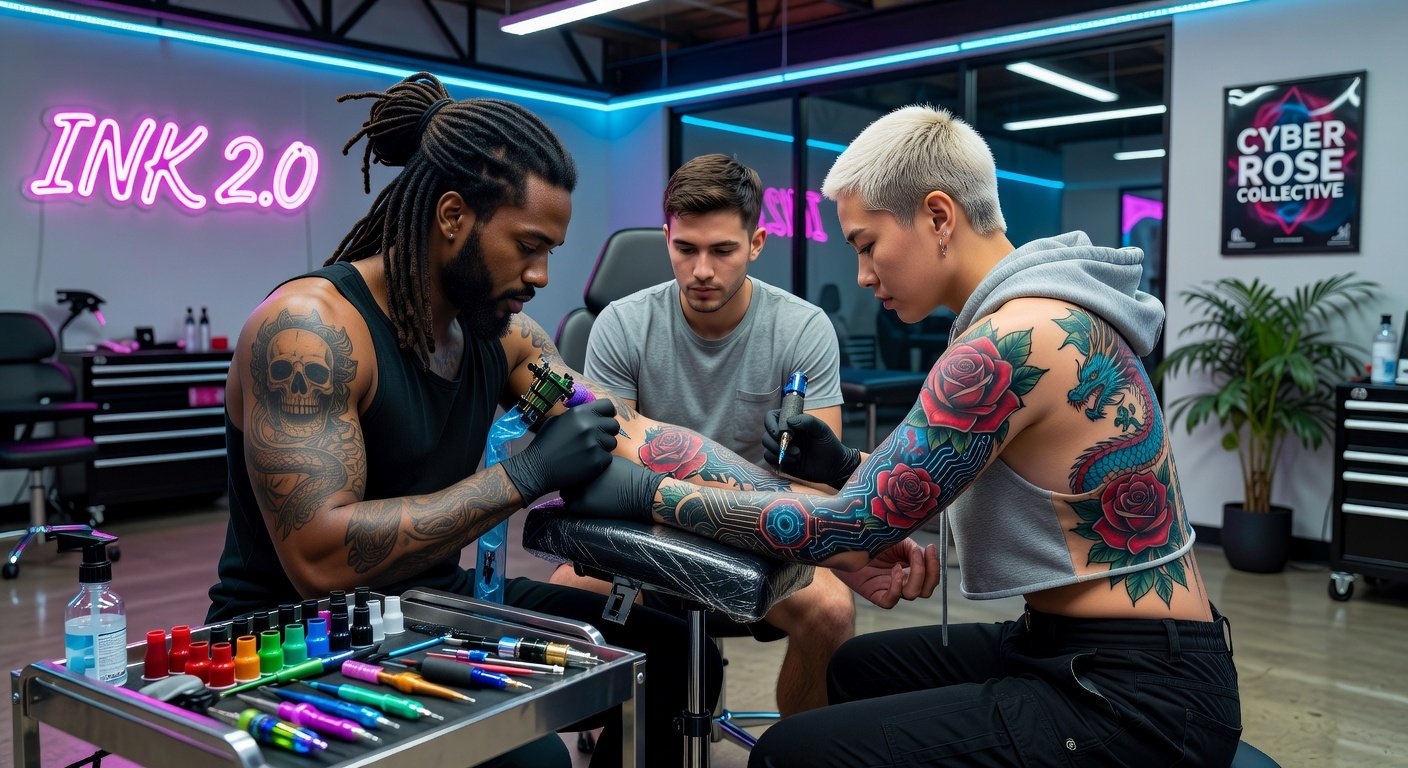
In 2026, the tattoo world is witnessing a seismic shift as artist collaborations redefine ink culture. Gone are the days of solitary studio sessions; today, duos and trios of tattooists are fusing their unique styles to create groundbreaking body art that pushes boundaries. These collabs aren't just artistic experiments—they're sparking conversations, influencing trends, and building vibrant communities. Whether you're a tattoo artist eyeing a partnership or a fan seeking fresh inspiration, this deep dive covers the top 2026 collabs, technique breakdowns, real-world impacts, and a practical guide to launching your own.
From neo-traditional meets cyberpunk to traditional Japanese and surrealism blends, these partnerships are democratizing innovation in the body art scene. According to industry buzz at events like the 2026 International Tattoo Expo, collabs now account for over 30% of high-profile custom pieces, drawing fans who crave one-of-a-kind designs.
Profiles of Top 2026 Tattoo Artist Collaborations
Let's spotlight some standout duos and trios making waves this year. These real-world examples showcase how diverse aesthetics collide to birth iconic ink.
- Xeno & Mira Collective (Neo-Trad + Abstract Geometry): Xeno, a Berlin-based neo-traditional master known for bold florals and mythical beasts, teamed with Mira, an LA geometric abstractionist. Their signature piece: a sprawling back tattoo where thorny roses morph into interlocking polyhedrons, symbolizing growth through structure. Debuted at InkFest 2026, it went viral with 500K+ shares on tattoo forums.
- The Void Trinity (Cyberpunk + Blackwork + Dotwork): This trio—Jax from Tokyo (cyberpunk neon circuits), Lena from NYC (dense blackwork shading), and Kai from Sydney (intricate dotwork)—created 'Neural Eclipse,' a sleeve where glowing circuits dissolve into starry voids via layered dots. Clients rave about the hypnotic depth, perfect for tech-savvy ink enthusiasts.
- Echo Duo (Surrealism + Realism): Paris surrealist Echo paired with hyper-realist Rocco from Milan for 'Dreamweaver Arms,' forearms depicting melting clocks intertwined with photoreal veins pulsing like rivers. Their collab emphasizes optical illusions that shift with skin movement.
These profiles highlight how collabs amplify individual strengths, resulting in designs unattainable solo.
Fusion Technique Breakdowns: How They Blend Styles
Success in collabs hinges on masterful fusion techniques. Here's a breakdown of key methods dominating 2026:
- Layering Overlays: Start with a base layer from one artist's style (e.g., blackwork solids), then overlay the partner's elements (e.g., colorful cyber accents). Use precise needle depths to avoid bleed—Xeno & Mira swear by 3RL liners for geometry on trad shading.
- Modular Composition: Divide the canvas into zones: 40% Artist A, 40% Artist B, 20% shared transition. The Void Trinity uses UV-reactive inks in transitions for glow-under-blacklight effects.
- Negative Space Synergy: Leverage unpainted skin as a canvas bridge. Echo Duo's surreal clocks 'float' via realistic shading gaps, creating 3D pop.
Pro tip: Test on synthetic skin first to harmonize line weights—mismatched gauges ruin the flow.
Community Impact Stories: Real Change from Collabs
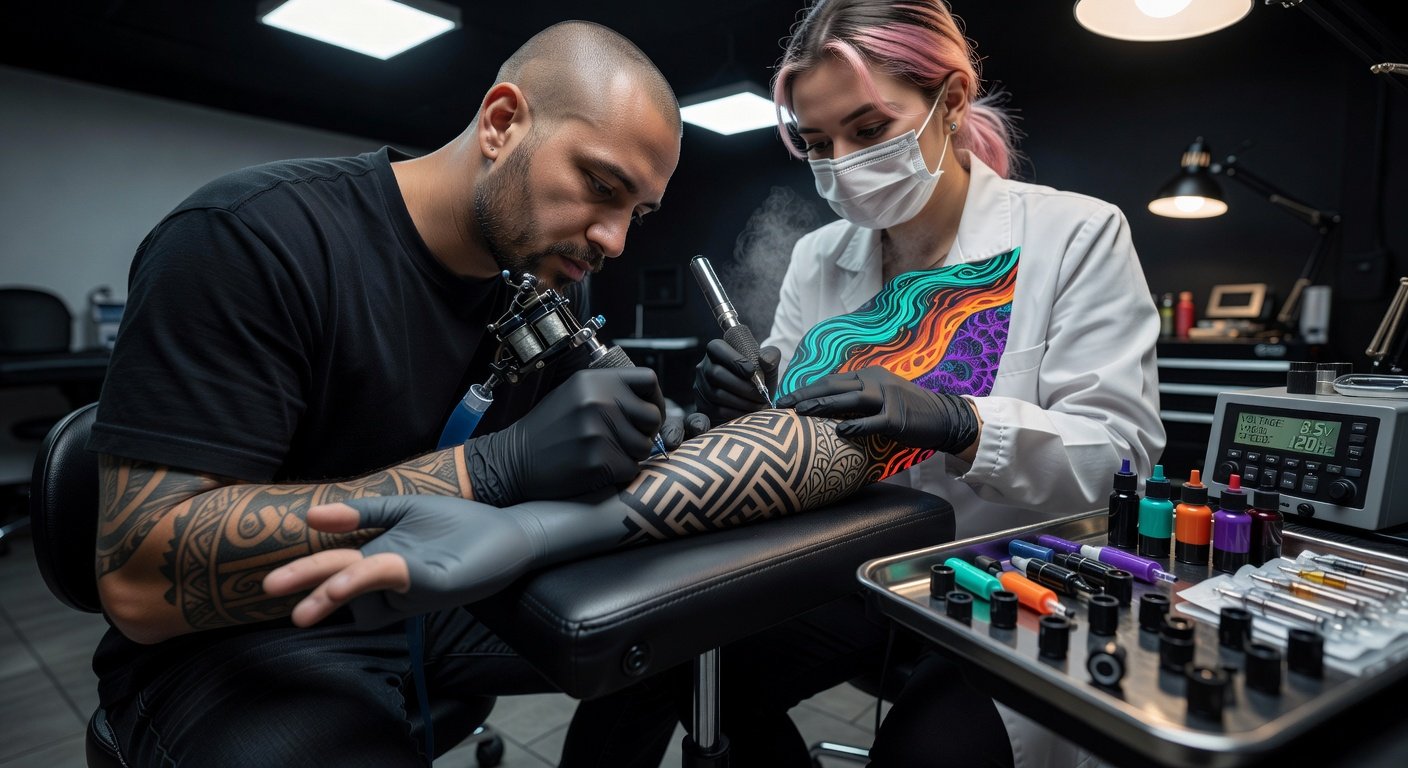
Collabs aren't just pretty pictures; they're reshaping ink culture. Take the 'Ink Unity Project' by Xeno & Mira: their collab funded free tattoos for 50 underserved youth, sparking a global wave of community-driven art. Fans report heightened appreciation— one Reddit thread with 10K upvotes details how a Void Trinity piece helped a client embrace their neurodiversity through its neural motifs.
In tattoo circles, these stories foster inclusivity. Women-led collabs like the all-female 'Siren Syndicate' (watercolor + tribal) have boosted female representation from 25% to 40% in convention lineups, per 2026 expo stats. Moreover, collabs drive social media engagement: collaborative hashtags like #InkFusion2026 amassed 2M posts, connecting artists worldwide.
Solo vs. Team Work: A Comprehensive Comparison
Is collab hype worth it? Compare the two:
| Aspect | Solo Work | Team Collab |
|---|---|---|
| Creativity | Personal vision, consistent style | Hybrid innovation, fresh perspectives |
| Time Efficiency | Faster ideation, full control | Longer planning, but shared workload |
| Client Appeal | Signature fans | Broad appeal, viral potential |
| Risks | Burnout from repetition | Style clashes, scheduling issues |
| Portfolio Boost | Steady growth | Exponential exposure |
Solo shines for niche purists, but teams excel in trendsetting. Data from Tattoo Life Magazine's 2026 survey shows collab artists book 25% more appointments.
Step-by-Step Guide: Starting Your Own Tattoo Collab
Ready to team up? Follow this roadmap:
- Find Your Match: Scout via Instagram DMs, Discord tattoo servers, or apps like TattooConnect. Align on styles—e.g., blackwork + watercolor.
- Brainstorm Virtually: Use Procreate or Photoshop for mockups. Set ground rules: equal credit, shared sessions.
- Prototype: Ink a small collab on volunteer skin or fake hides. Photograph every stage.
- Schedule the Session: Alternate artists per section; one inks, the other shades.
Promote Ruthlessly:
Post time-lapses on TikTok, tag collaborators. Enter expos for visibility.- Follow Up: Client feedback refines future work. Document for portfolios.
Networking Tips for Tattoo Circles
- Attend virtual summits like World Tattoo Expo streams.
- Join subreddits r/tattooartists and Facebook groups 'Global Ink Collabs.'
- Host live IG sessions sketching collab ideas.
FAQ: Legal Aspects of Shared Tattoo Designs
Q: Who owns the collab design copyright?
A: Joint authorship applies if contributions are inseparable. Consult U.S. Copyright Office guidelines for registration—register as co-authors to protect.
Q: Can clients resell collab tattoos?
A: Designs are yours; clients own the body art. Use contracts specifying reproduction rights.
Q: Health regs for multi-artist sessions?
A: Each follows sterile protocols. Reference FDA tattoo safety standards to avoid cross-contamination.
Q: International collabs—IP issues?
A: Use Berne Convention; watermark digital proofs.
Conclusion: Join the Collab Movement
2026's artist collabs are more than trends—they're the future of ink culture, blending talents for unparalleled creativity and community. Whether profiling icons or guiding your first duo, these partnerships invite everyone to innovate. Dive in, connect, and redefine body art one fusion at a time.
No comments yet. Be the first!